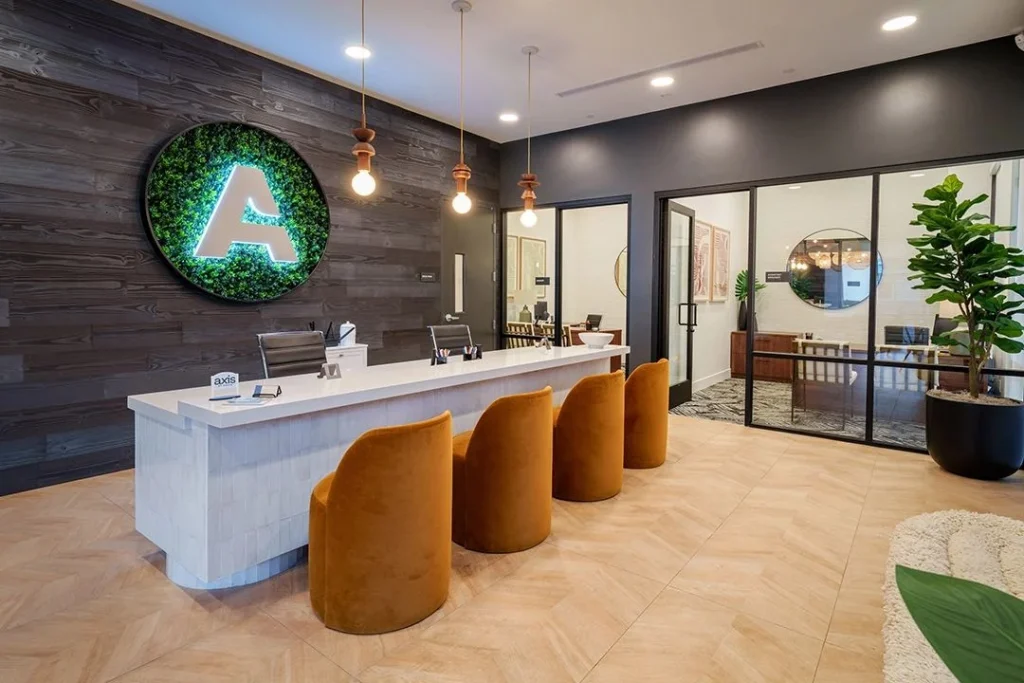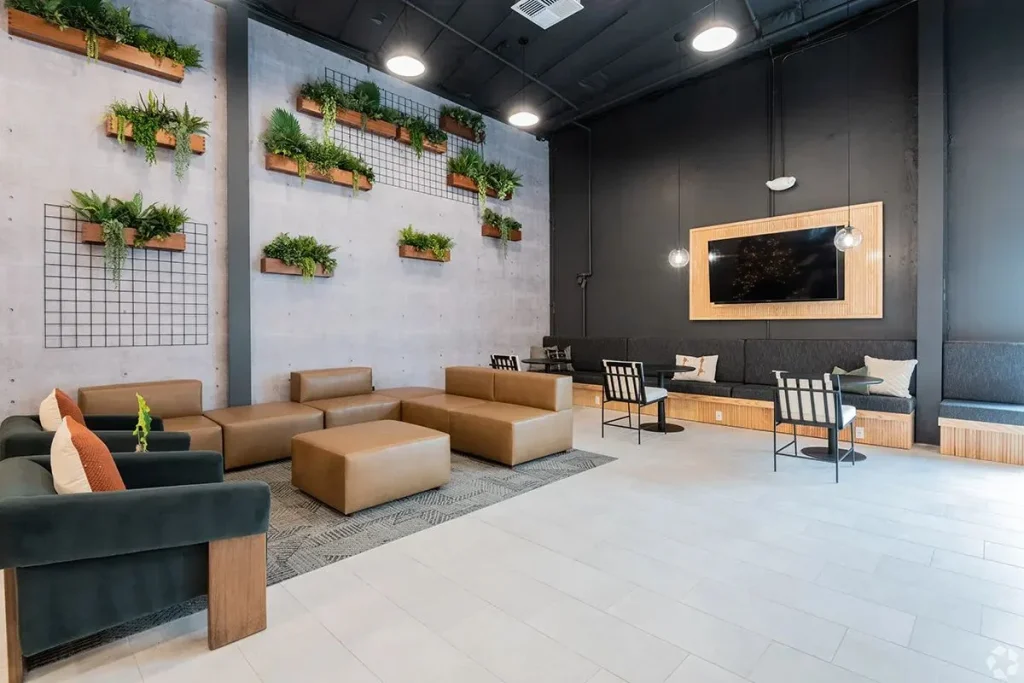

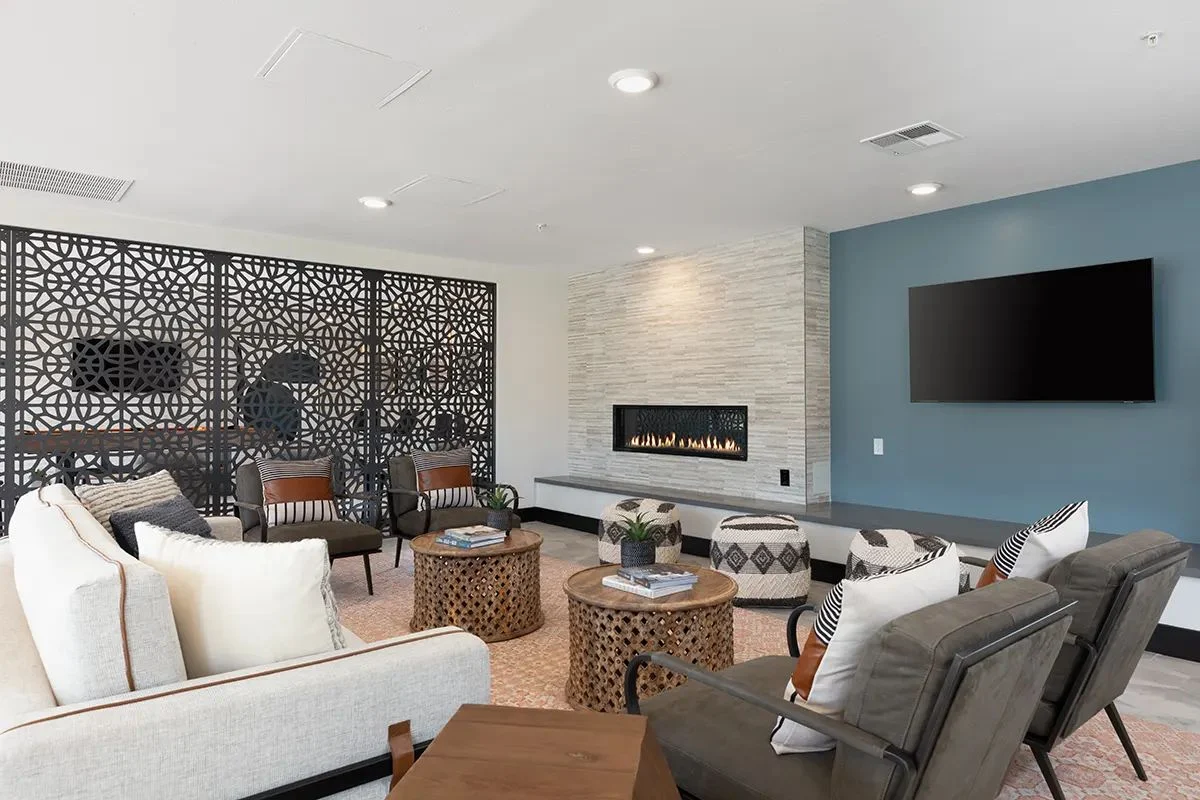
A conventional apartment might turn a unit every few years. A student building turns most of its beds every single year, all at once, in a window that feels shorter every time you look at the calendar.
That’s the real design brief for student housing. Not “make it cool.” Make it cool, then make it survive a year of 19-year-olds, a frantic move-out, a summer turn crew and another year of 19-year-olds. Repeat until the pro forma says stop.
The good news: durability is mostly a selection problem, not a budget problem. After 31 years of doing this, we’d rather pick the right product once than pick the pretty one twice.
Know where the damage actually happens
Wear in student housing isn’t spread evenly. It concentrates in a few predictable places, and those places deserve the money.
- Bedroom walls at desk and bed height. Chairs roll back, headboards bump, posters go up with whatever adhesive was nearby.
- Unit entries and hallways. Move-in carts, bikes, mini fridges and the occasional couch that didn’t quite fit.
- Kitchen counters and cabinet edges. Heavy daily use, often by four people who each assume someone else will wipe it down.
- Common-area seating. Sat on, slept on, stood on and moved around constantly.
- Elevator lobbies and corridors. Every move-in and move-out rolls through here.
Spend on these zones. Save in the places that don’t get touched.
Furniture that makes it through the year
Furnished units are the norm on many student projects, so the furniture package is really part of the building. Here’s how we think about it.
| Piece | What survives | What struggles |
|---|---|---|
| Bed frames | Welded or bolted metal or solid wood, adjustable height | Knock-down frames with cam locks |
| Desks | Solid tops with edge banding that wraps, no sharp corners | Thin laminate that peels at the edge |
| Seating | Commercial frames, replaceable seat pads | Home-grade sofas, fixed cushions |
| Dressers | Metal drawer glides, sturdy pulls | Friction drawers, small knobs |
| Common tables | High-pressure laminate or solid surface tops | Veneer tops that swell when wet |
A useful test: if a part breaks, can maintenance replace just that part in the summer turn? Replaceable cushions, drawer fronts and glides mean you fix the piece instead of throwing it away. Over a few cycles that adds up.
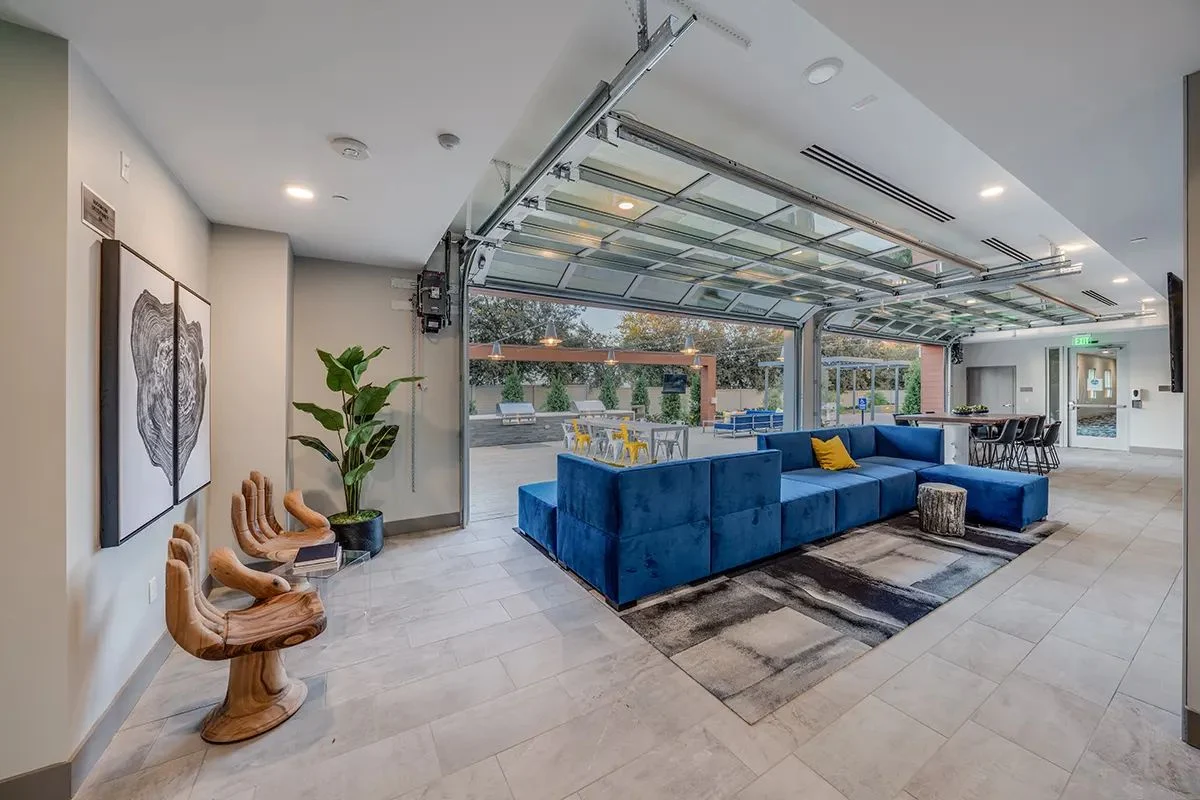
Finishes that shrug it off
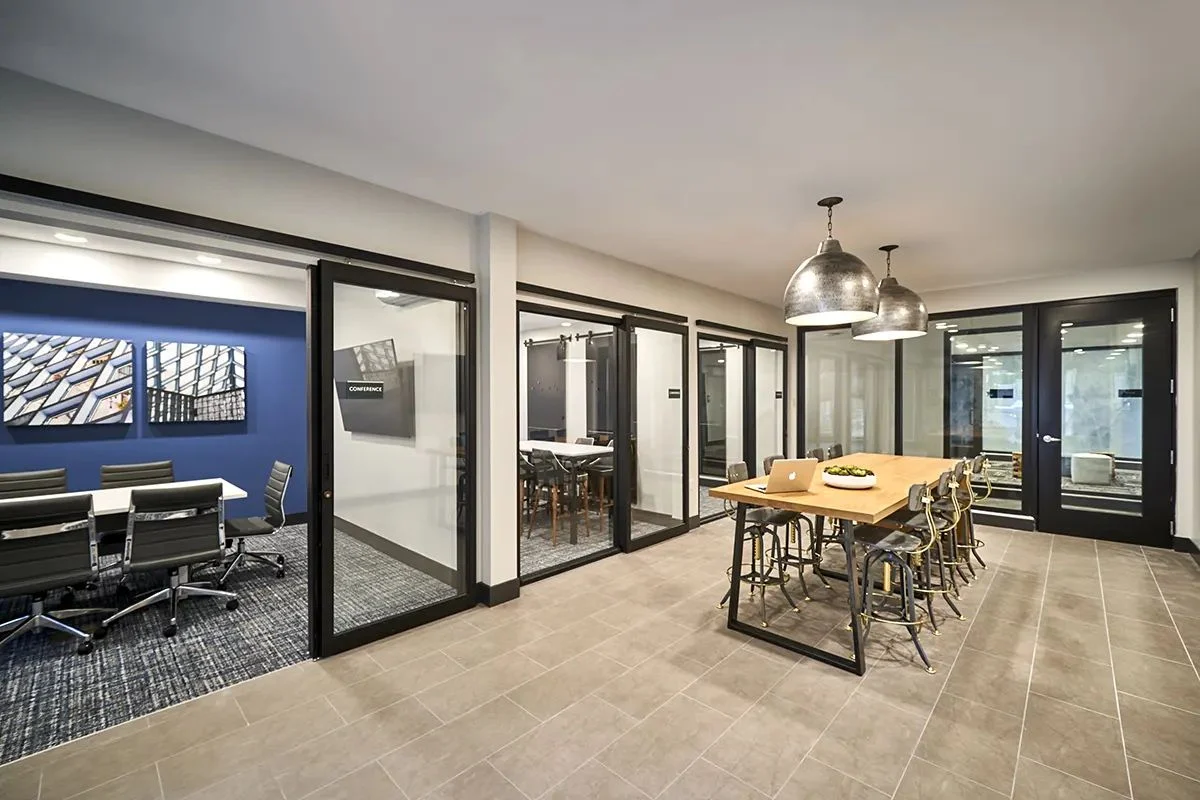
Flooring. Pick a wear layer rated for commercial traffic, with a pattern and color that hide scratches and scuffs. Mid-tone wood looks with some variation forgive a lot. Very dark or very light floors show everything.
Walls. Use a washable paint finish throughout, and wall protection where the chairs and carts hit. In the corridors, a durable wallcovering or wainscot at the right height saves years of patching.
Counters. Quartz or a good solid surface in the kitchens. Laminate can work in some places, but choose a profile that doesn’t expose a seam at the edge.
Upholstery. Performance fabrics with real cleanability, in patterns or textures that hide life. A solid pale linen look in a student lounge is a brave choice.
Hardware and fixtures. Commercial-grade pulls, hinges and faucets. Every cheap hinge is a future work order during the busiest two weeks of the year.
The summer turn is where durability pays you back. Every piece that doesn’t need replacing is one less thing standing between you and August.
Design the turn itself
Turnover gets easier when the design assumes it’s coming.
- Standardize. Use the same bed, desk and dresser across as many unit types as possible. One set of spare parts, one set of instructions.
- Keep attic stock. Order extra flooring, fabric and wallcovering with the original package, from the same run, so repairs actually match.
- Pick replaceable over repairable. Seat pads, drawer fronts and table tops that swap in minutes beat anything that needs a specialist.
- Document the package. A clean FF&E record with every product, finish and source makes reorders fast when the original rep has moved on.
- Walk the building after year one. Look at what’s worn and what isn’t. Adjust the spec for the next project.
Tough doesn’t have to look institutional
The trap is solving durability with products that look like a hospital waiting room. Students notice. Parents notice more. The building that feels like a dorm has a harder time with pre-leasing than the one that feels like a good apartment.
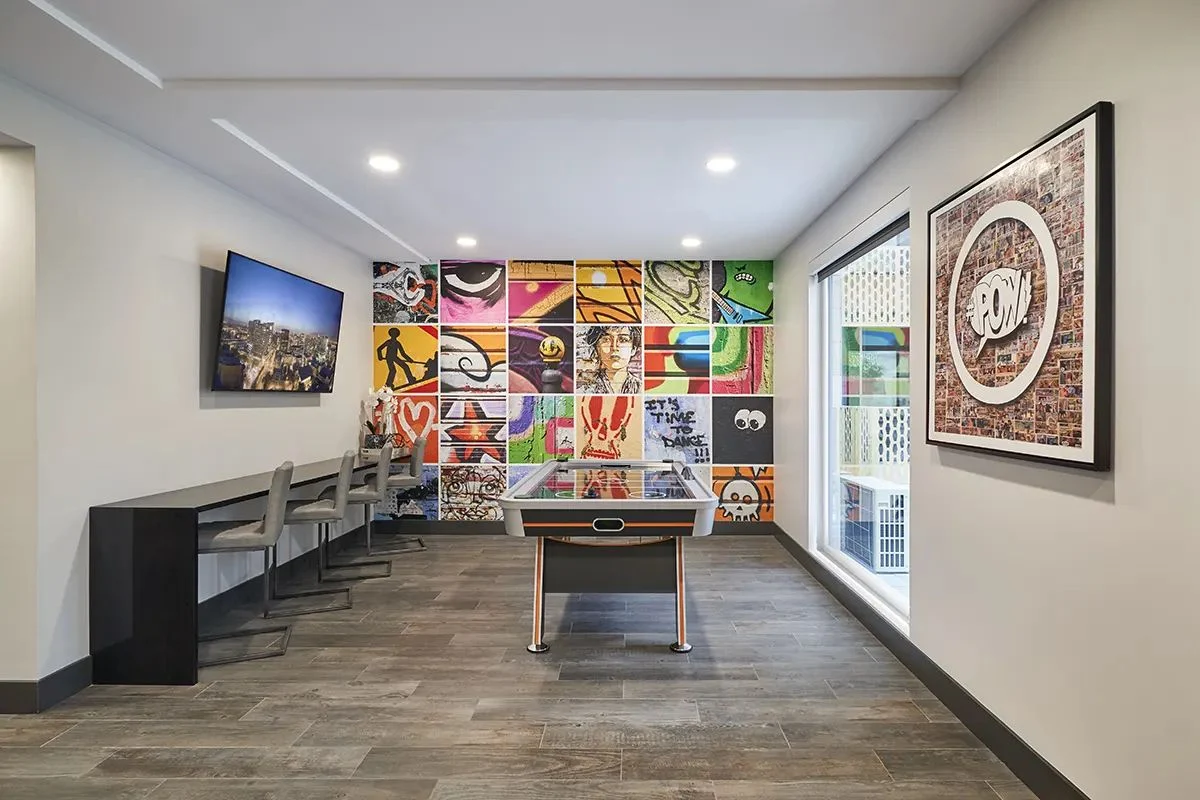
Our standard is simple: it should feel like a home, not a facility. A room can have commercial frames, performance fabric and scrubbable walls and still feel warm, personal and a little bit fun. That’s done with color, lighting, layout and a few pieces of character, not with fragile materials.
The short version
- Student buildings turn nearly every bed every year, so durability is the core brief.
- Spend on the zones that take the hits: bedroom walls, entries, counters, seating and corridors.
- Standardize, keep attic stock and choose replaceable parts, all without letting the building look institutional.
We love the summer turn that ends early because nothing needed replacing. Nobody throws a party for it, but they should.