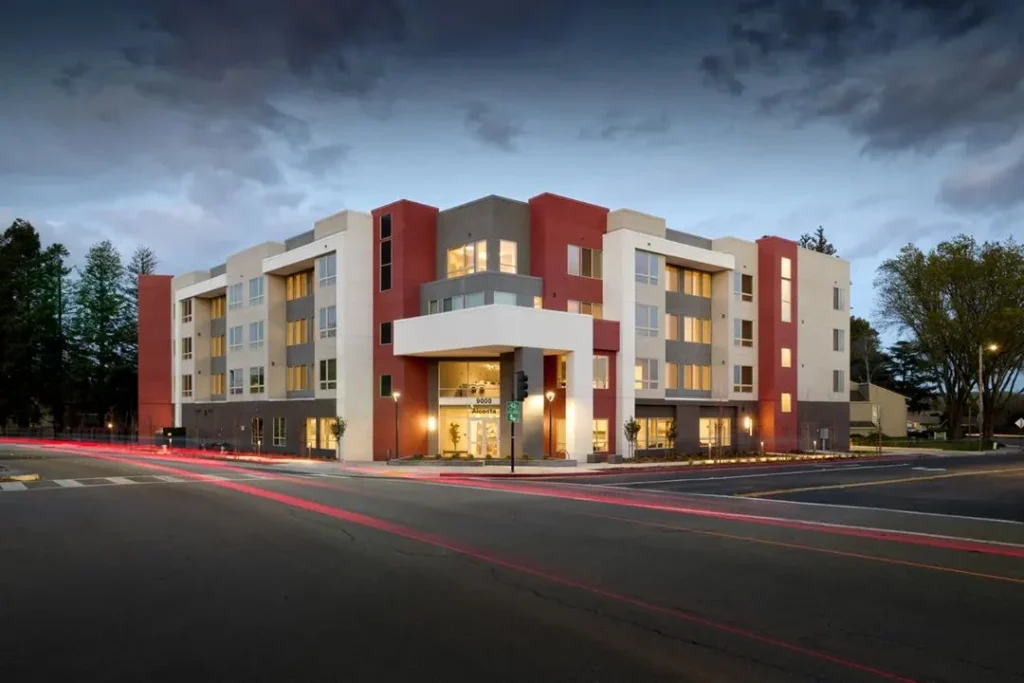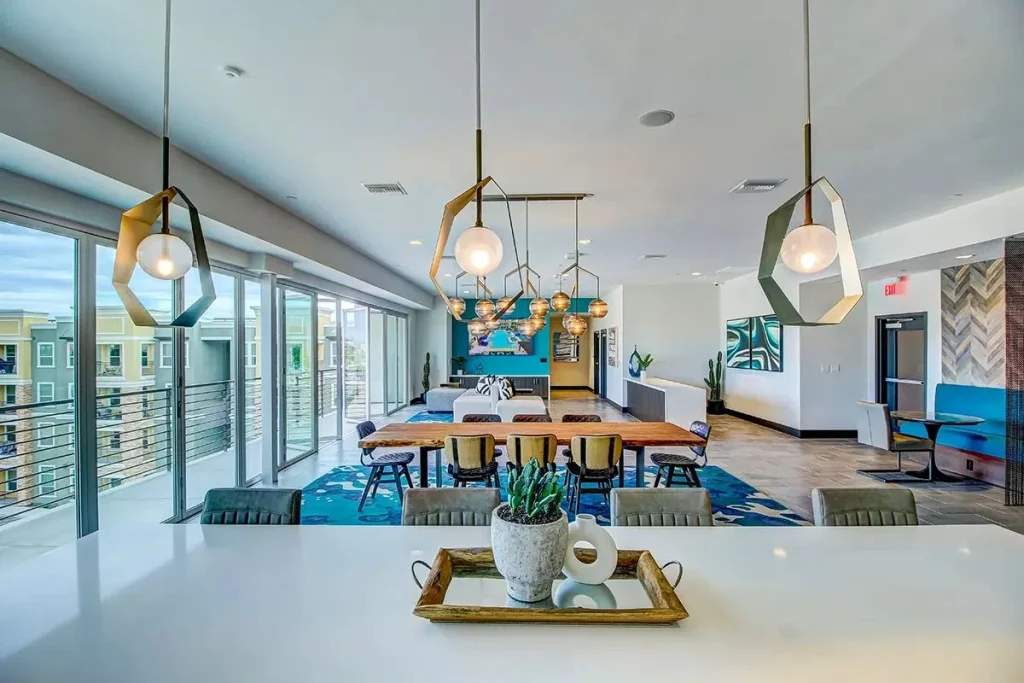

Walk into two senior communities on the same afternoon and you can often guess which one fills faster before you reach the front desk. One smells like coffee and has a lamp glowing in the corner. The other has a long shiny corridor, a row of matching chairs lined up against the wall and a laminated sign that starts with the word “Please.”
A home, not a facility, is the standard we hold on every senior project. It’s simple to say and surprisingly hard to keep, because nearly every pressure on a senior building pushes toward the institutional answer. Durability, infection control, code, budget, maintenance. Each one has an easy facility-style solution. Our job is to find the warmer one that works just as hard.
What makes a room read as a facility
It’s rarely one thing. It’s a pile-up of small signals:
- Glossy floors that stretch forever down a corridor
- Ceiling light only, all the same, all switched on at once
- Furniture pushed to the walls, everyone facing an empty middle
- One color family everywhere, usually beige or teal
- Equipment with nowhere to go: carts, lifts, walkers, laundry bins
- Stainless steel where a house would use wood, fabric or a warm metal
- Paper notices taped to every door
Any one of those is survivable. Five of them together and the adult child on the tour is quietly doing the math on how soon they can move Dad somewhere else.
What makes a room read as a home
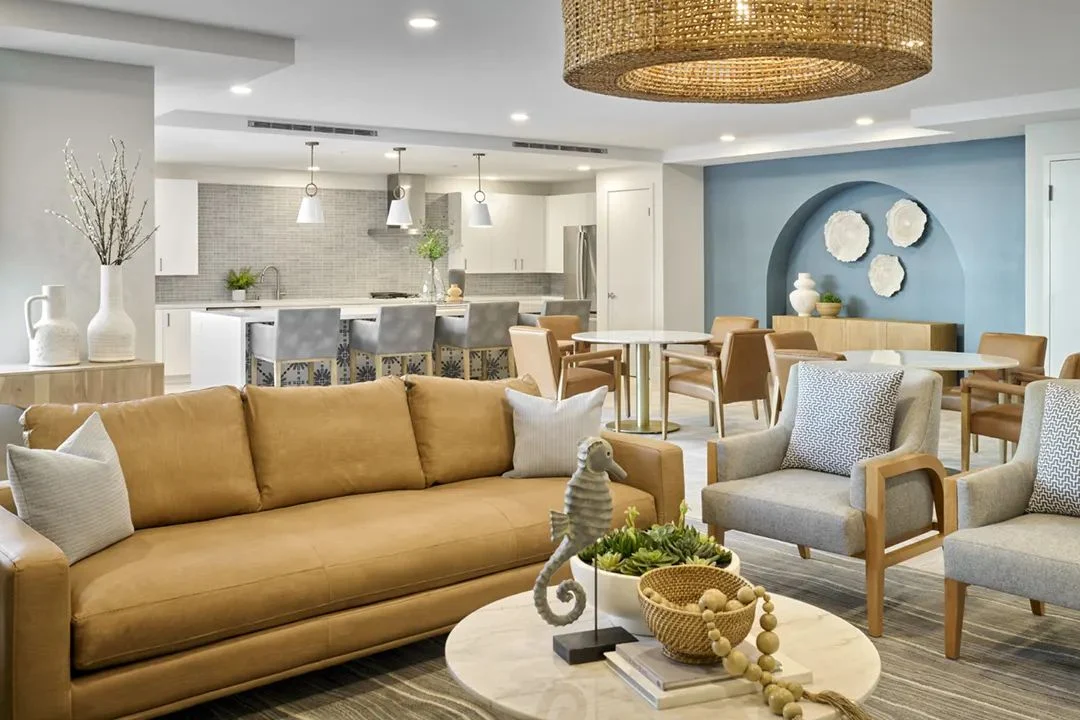
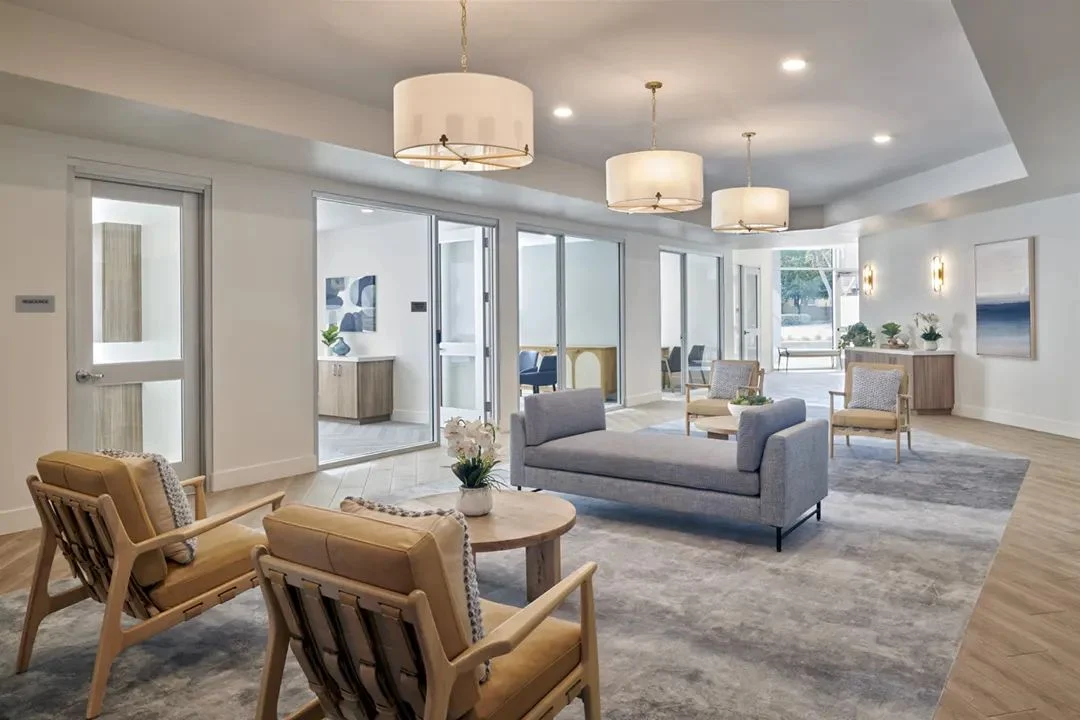
Rooms sized like rooms. A house has living rooms, not one great hall. Break big spaces into smaller seating groups, each with a rug, a lamp and a reason to sit there. Two or three conversation areas feel far more like home than one giant open lounge.
Light from more than one direction. Lamps, sconces and daylight make a room feel lived in. They also help aging eyes, but the first reason is the one people feel when they walk in.
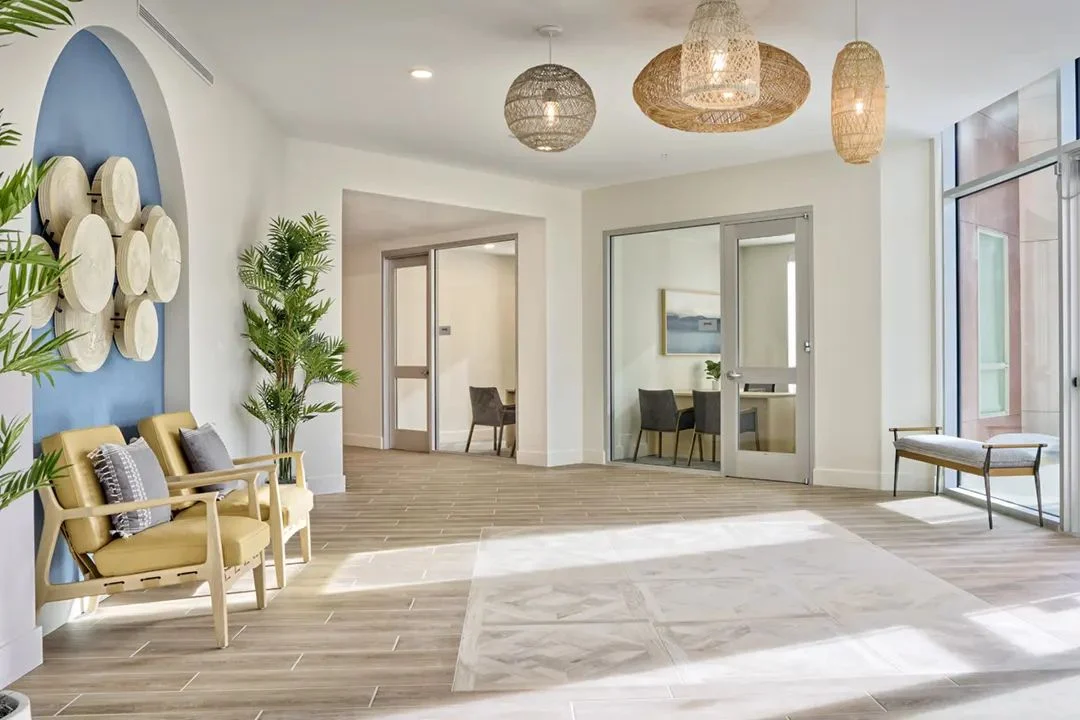
Materials that look like a house. Wood tones, woven textures, painted millwork, warm metal on the hardware. Commercial-grade performance, a look that feels like home.
Things on the walls and shelves. Art, books, a few objects with a local story. Keep it edited and secured, but keep it.
A place for everything that isn’t decor. Walker parking near dining. A closet for the activity cart. Housekeeping storage close to where it’s used. When operations has somewhere to put things, the lounge stays a lounge.
Durability comes from better selection
The usual argument for institutional finishes is that warmer, home-like ones won’t hold up. We hear it constantly, and we understand where it comes from. Somebody once put a department store sofa in a memory care lounge and it was finished within a year.
The answer isn’t to give up and go institutional. It’s to specify better. Here’s how we usually swap:
| Institutional default | Home-like alternative that holds up |
|---|---|
| Vinyl chairs in a single color | Performance fabrics in forgiving patterns, on commercial frames |
| Glossy sheet flooring everywhere | Matte, wood-look resilient flooring with quiet patterns and good slip resistance |
| Bare stainless handrails | Rails with a wood or wood-look top that matches the trim |
| One overhead fixture type | Layered ceiling light plus lamps and sconces on shared controls |
| Taped-up paper signs | Framed signage and a proper activity board |
| Beige walls throughout | A considered palette, with contrast placed where it helps people see |
Every line in that table is a selection decision. None of them needs a bigger budget if it’s decided early. What they do need is a designer who knows which products survive a senior building and which only survive the showroom.
Durability isn’t a reason to look like a facility. It’s a reason to pick better products.
Different levels of care, same standard
The standard doesn’t bend by care level, but the way it shows up does.
In independent living, home means something close to a boutique hotel crossed with a comfortable house. In assisted living, it means the same warmth with more support hidden in the details: sturdy chair arms, contrast at edges, handrails that read as trim. In memory care, it means calm, familiar and uncluttered, with fewer choices and more gentle cues.
A memory care household that feels like a cozy home kitchen is doing clinical work. It just doesn’t look like it, and that’s the point.
Why operators should care
Home-like design isn’t a matter of taste. It shows up in the business:
- Tours. Adult children are deciding whether they’d feel good leaving a parent here. A home-like building answers that before the sales director says a word.
- Resident mood. People act differently in a living room than in a waiting room. Care staff notice it right away.
- Staff retention. It’s simply nicer to work somewhere that feels like a home.
- Year-four cost. When home-like finishes are chosen for lifecycle, you get the warmth without the early replacement cycle.
A quick gut check
Stand in any common room and ask one question: if the furniture were in someone’s house, would it look strange? If the answer is yes, find out why. It’s usually the lighting, the layout or a finish that was picked from the wrong catalog. All three are fixable, and they’re cheapest to fix while the building is still on paper.
We’ve designed homes for more than 1,000,000 happy residents over 31 years, and senior buildings are where the word “home” carries the most weight.