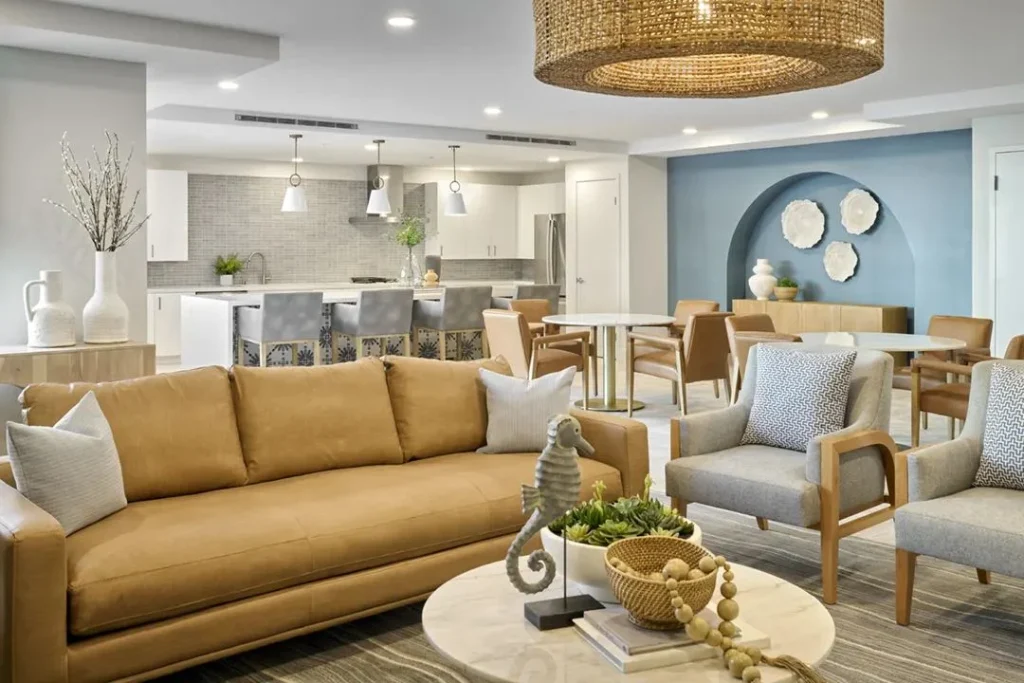


Watch a lounge in any senior community for an hour and you’ll see it. Some chairs are always taken. Some never are. Residents know exactly which ones they can get out of without help, and they vote with their feet.
Seating is one of the highest-stakes FF&E decisions in senior living. It affects falls, dignity, staff workload and how the room looks when a family walks through. It’s also where the gap between a showroom chair and a senior living chair is widest.
Seat height: not too low, and not one size
The most common seating problem we see is chairs that sit too low. A deep, low lounge chair looks inviting and feels great for a while. Then the resident has to stand up. A low seat demands a big push from the legs and arms, and many residents simply can’t manage it alone.
We aim for seat heights on the higher side of what feels normal in a house, so that a seated resident’s hips sit level with or a bit above the knees. But we don’t use one height everywhere. People come in all sizes. A lounge with a thoughtful range of seat heights lets shorter and taller residents both sit with their feet flat on the floor.
Watch out for:
- Cushions that compress over time and quietly lower the seat
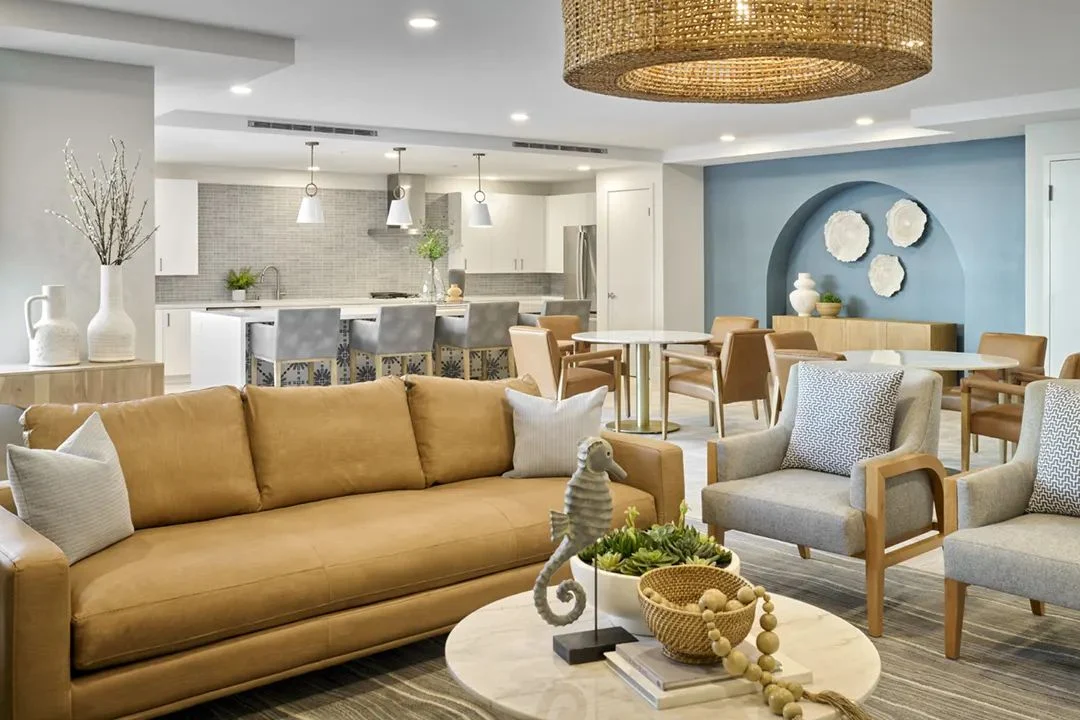
- Sofas, which usually sit lower and deeper than chairs and are harder to rise from
- Ottomans and poufs used as seats, which give you nothing to push off from
Seat depth and firmness
Depth. A very deep seat pushes a resident back so far that their feet lift off the floor, or they have to scoot forward before they can stand. A moderate depth gives back support and still lets them get their feet underneath.
Firmness. Plush cushions feel luxurious and then trap people. A firm, supportive core with a comfortable top layer gives a stable base to push from. It also holds its shape longer, which is a quiet year-four cost win.
Back. A supportive back with a gentle recline is comfortable without sliding anyone forward or tipping them too far back.
Arms: the most important part of the chair
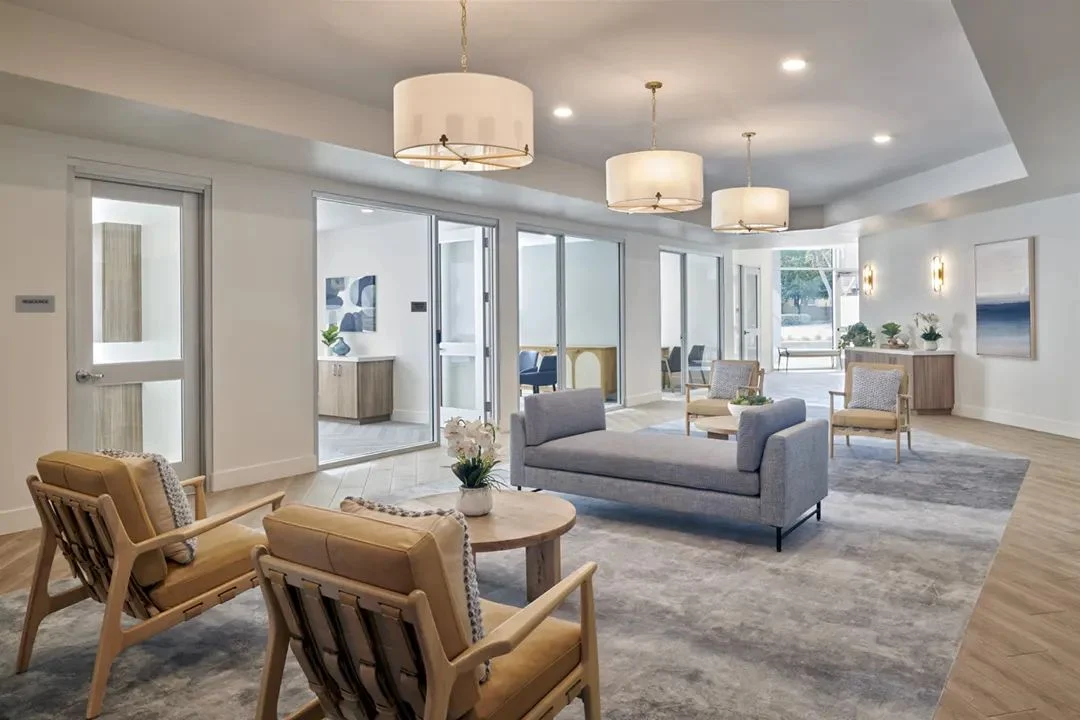
Arms are how most older adults get up. They also help people sit down with control, and the moment of sitting is when a lot of falls happen.
Good senior seating arms:
- Run close to the front edge of the seat, where hands naturally land
- Are sturdy and firmly attached, with zero flex
- Have a shape the hand can wrap around, not a thin edge or a wide flat slab
- Are finished in wood or another durable material that won’t wear through at the front
Armless chairs still have a place: at a dining table for residents who transfer from a wheelchair, or in an activity room where people move around a lot. Just don’t make them the default.
Stability: nothing moves unless you want it to
Chairs shouldn’t tip. Wide, well-placed legs and a low center of gravity. Residents lean on chair backs and arms as they walk past, like a handrail.
Chairs shouldn’t skate. Pick glides for the specific floor, so the chair stays put when someone pushes up but can still be pulled out at dining.
Dining chairs are a special case. They need to slide in and out while someone is seated, because staff and residents scoot them to the table. Some communities use front casters or specialty glides. That’s a conversation with care leadership, not just a catalog pick.
Tables count too. Pedestal bases that wobble or tip when leaned on are a hazard. Residents use tables to steady themselves as much as to hold a cup of coffee.
The best senior chair is the one a resident can get out of without calling anyone.
Fabrics and cleaning
Senior seating needs performance fabric that resists moisture and cleans easily, especially in dining, assisted living and memory care. Look for fabric that stands up to standard disinfectants without fading, and seat construction that lets spills wipe away instead of soaking into the cushion. A cleanout gap at the back of the seat is a small detail housekeeping will love.
The fabric can still be beautiful. Pattern, texture and warm color are all available in performance grades. Contrast helps here too: upholstery that stands apart from the floor makes the seat easier to find.
A seating plan by space
| Space | What we prioritize |
|---|---|
| Main lounge | A range of seat heights, strong arms, a few supportive high-back chairs, sofas used sparingly |
| Dining | Sturdy armchairs that slide easily and clean fast, plus some armless spots for wheelchair transfers |
| Activity room | Light, movable chairs with arms and very stable tables |
| Corridors | Occasional chairs with arms along longer routes, for a quick rest |
| Memory care | Familiar home styles, very stable, with clear contrast against the floor |
| Apartments | Guidance for residents and families picking their own chairs |
Seating choices ripple into staffing. Every resident who can stand on their own is one less assist for the care team. Every cushion that holds its shape is one less reupholstery order. Every chair that slides smoothly at dining saves a little strain on the staff who push it in, many times a day.
The short version
- Seat heights on the higher side, in a range, with moderate depth and firm cushions.
- Sturdy arms that reach the front of the seat matter more than any other feature.
- Stable chairs and tables, cleanable performance fabrics and real-world testing with residents.
We’ve furnished a lot of rooms over 31 years, and in senior living the humble chair still gets more of our attention than anything else.