
Most of us have noticed it in a parent or grandparent. The restaurant menu is suddenly “too small.” The hallway at night is suddenly “too dark.” The sunny window is suddenly “too bright.” None of that is fussiness. It’s simply how eyes change.
A quick note up front: we’re not going to quote target light levels or color temperatures here. Those depend on the space, the codes that apply and your lighting designer or engineer. What we can share is how we think about lighting in senior living from the interiors side, and what we’ve seen work.
What changes as eyes age
In plain terms, with age:
- Less light reaches the back of the eye, so a room needs more of it to look equally bright.
- Glare gets harder to handle. Bright spots and reflections scatter inside the eye and wash out detail.
- Adjusting takes longer. Stepping from a bright room into a dim hallway, or the reverse, can leave someone briefly unable to see well.
- Color and contrast get harder to read. Some colors, like certain blues and greens, start to blend together.
- Sleep patterns can drift. Daylight and evening light help keep the body’s clock on schedule.
Each of those points toward a specific design move.
Five principles we follow
1. Generous light, evenly spread. Aim for rooms that are well lit from corner to corner, with no dark pockets or bright puddles. Indirect light bounced off ceilings and walls spreads more softly than a tight grid of downlights.
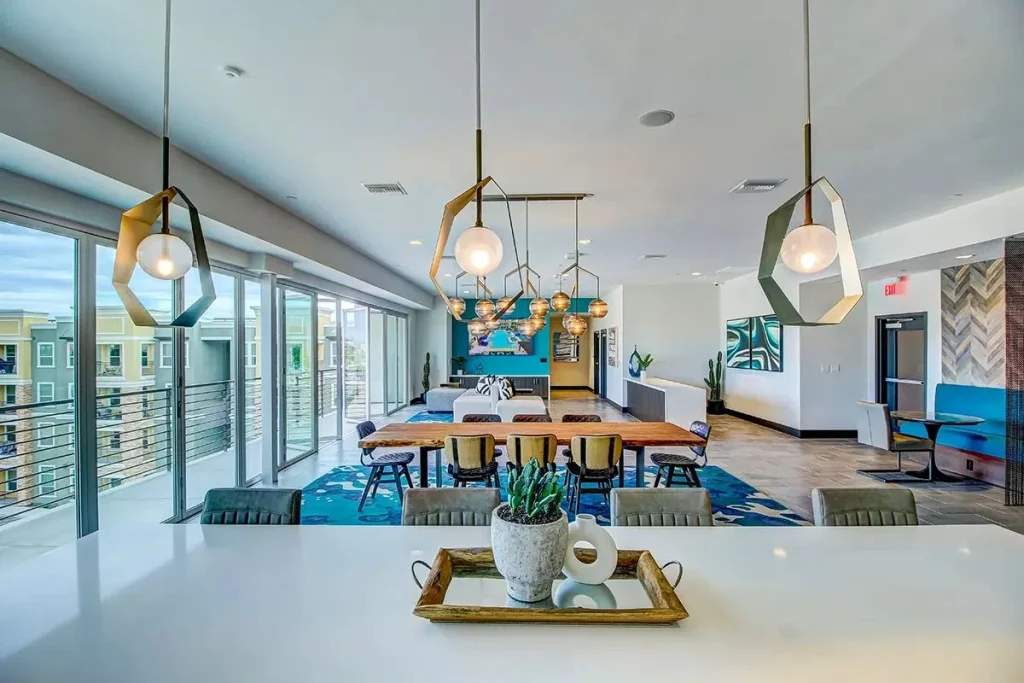
2. Glare control everywhere. Shade bare bulbs. Use diffusers. Skip glossy floors and tabletops that mirror fixtures and windows. Manage daylight with sheers and shades so residents can enjoy the view without squinting.
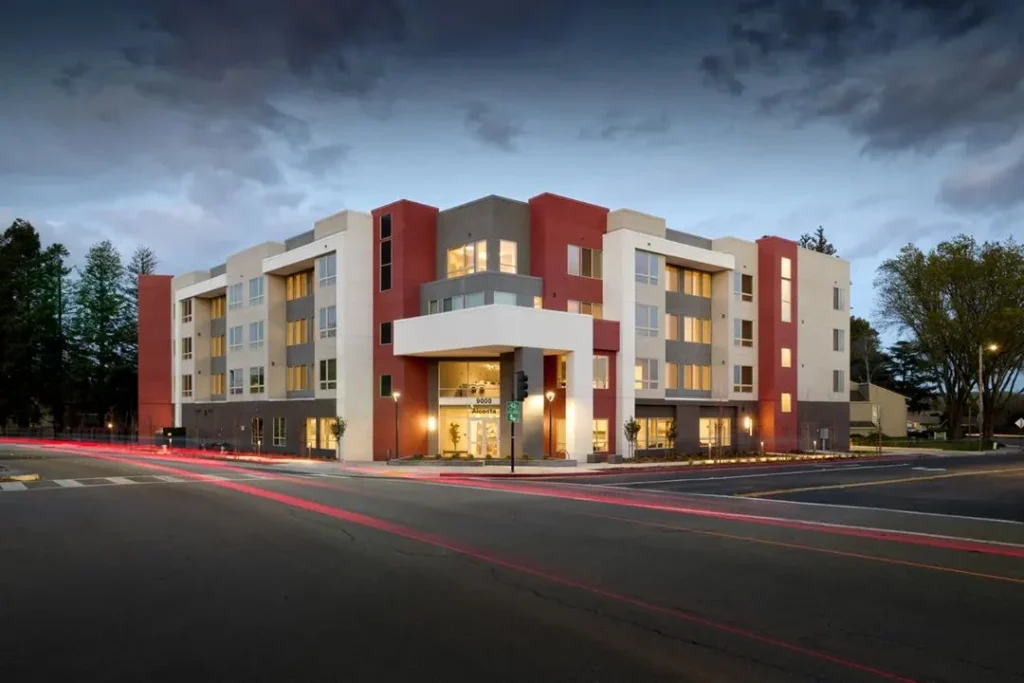
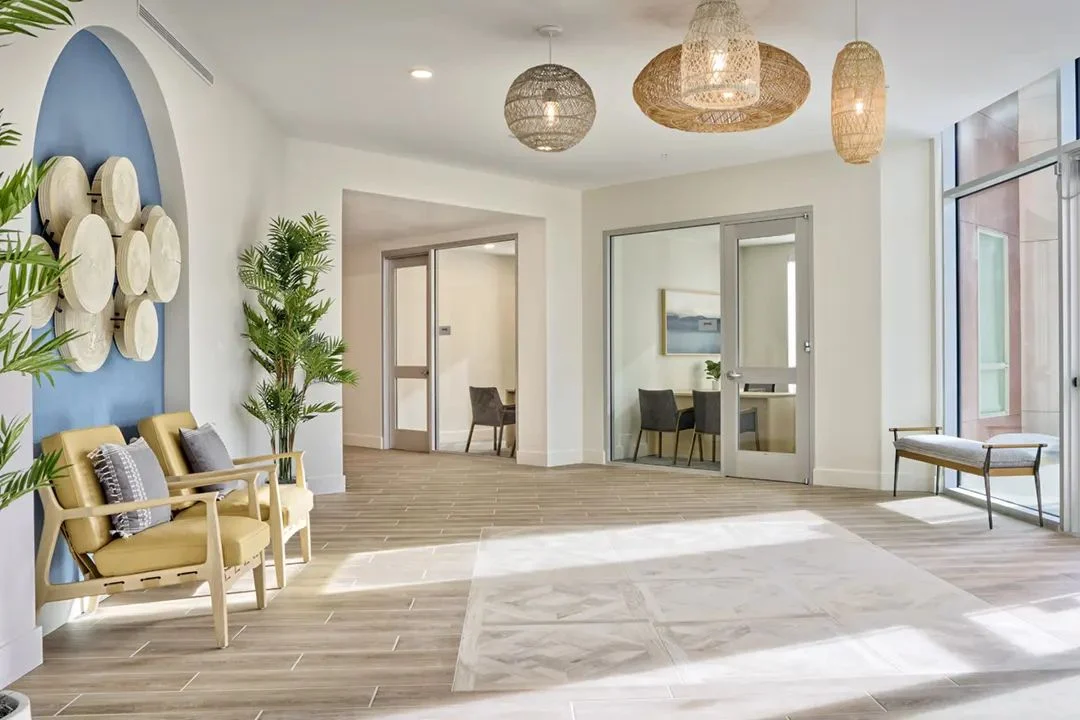
3. Gentle transitions. Keep light levels steady from room to room, and ease the change at the front door, where outdoor brightness meets the lobby. An entry that steps the light down gradually gives eyes time to catch up.
4. Light for tasks. Reading chairs need a lamp in the right spot. Dining tables need enough light to see the food and the faces across the table. Apartment kitchens, baths and closets need good light right where hands are working.
5. Follow the day. Brighter, crisper light during the day, warmer and softer light in the evening, with as much daylight as the building allows. Tunable fixtures can help in some spaces. Even without them, choosing warm lamps for evening lounges supports the natural rhythm.
Why lamps do so much work
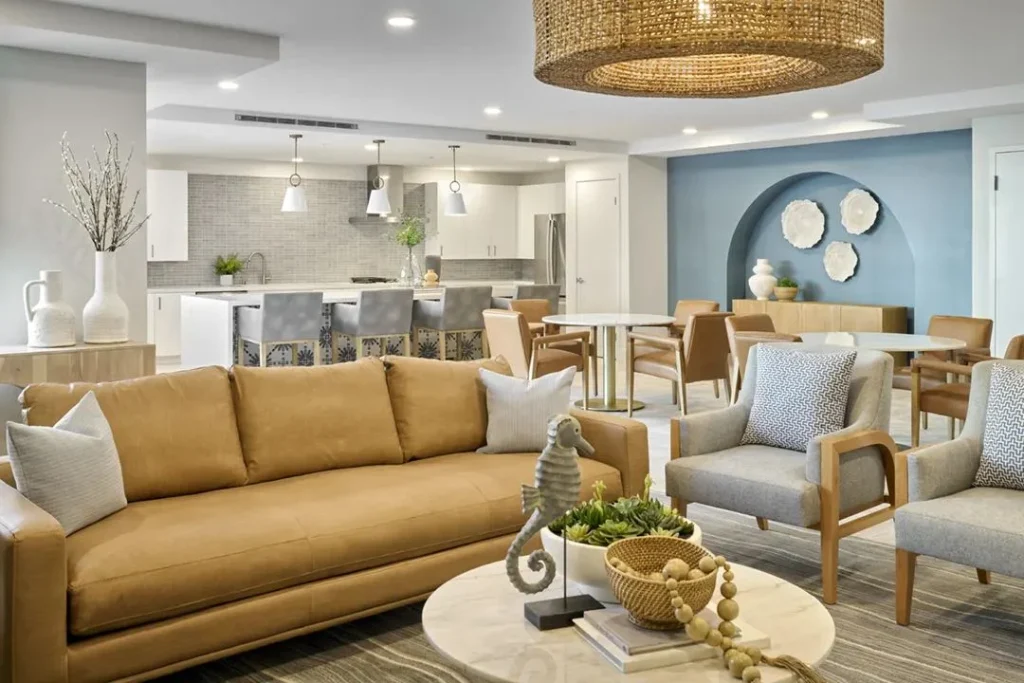
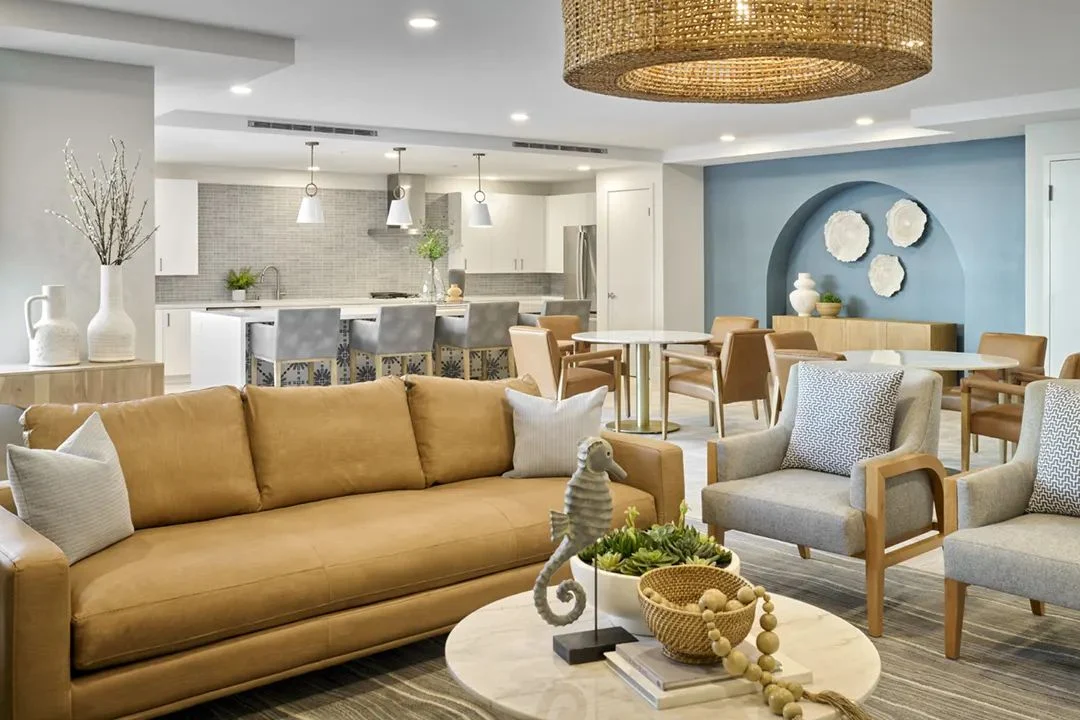
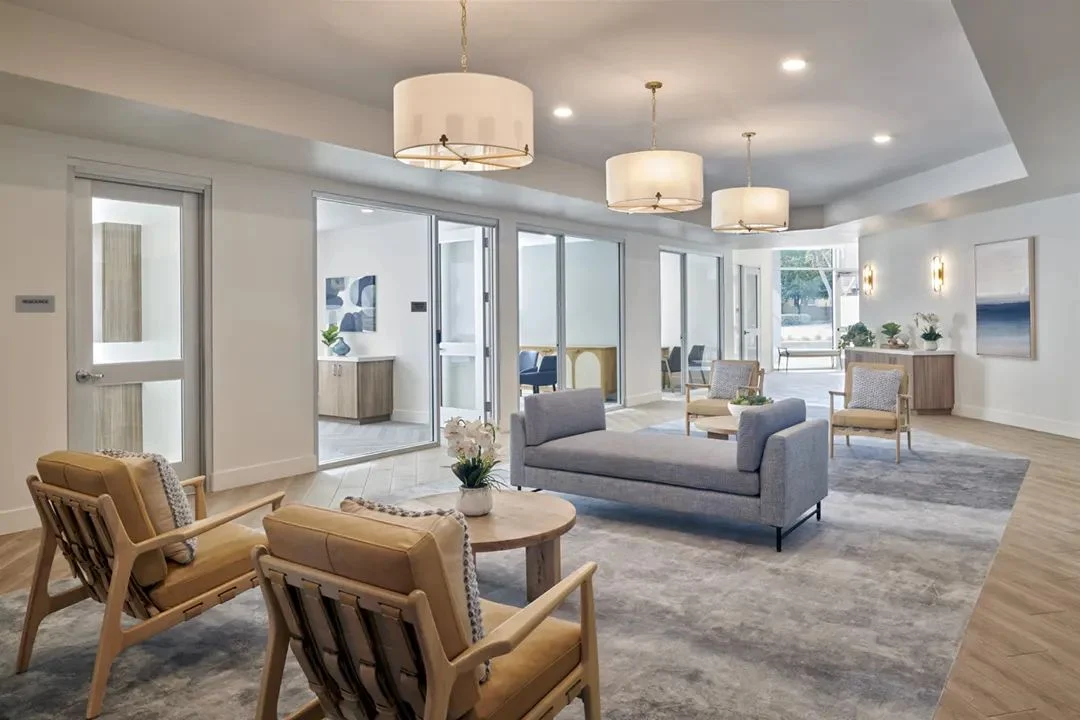
Lamps and sconces pull double duty. They put light at eye level, where aging eyes get the most from it, and they make a room look like a home. A lounge lit only from the ceiling feels like an office. The same lounge with table lamps and a few sconces feels like somebody’s living room.
The catch is operations. Lamps need outlets in the right places, cords that stay out of walking paths, heavy bases that won’t tip and a way for staff to switch them all on at once. That’s why we coordinate lamp locations with the electrical design early. Switched outlets, floor boxes under seating groups and weighted bases turn a nice idea into something that actually runs every day.
In senior living, a well-placed lamp is equal parts safety device and hospitality.
Space by space
| Space | What we focus on |
|---|---|
| Entry and lobby | A gradual step down from daylight, glare-free and welcoming |
| Corridors | Even light with no dark stretches, light on the walls to show edges, softer levels at night |
| Dining | Enough light to see food and faces, glare-free tabletops, warmer tone at dinner |
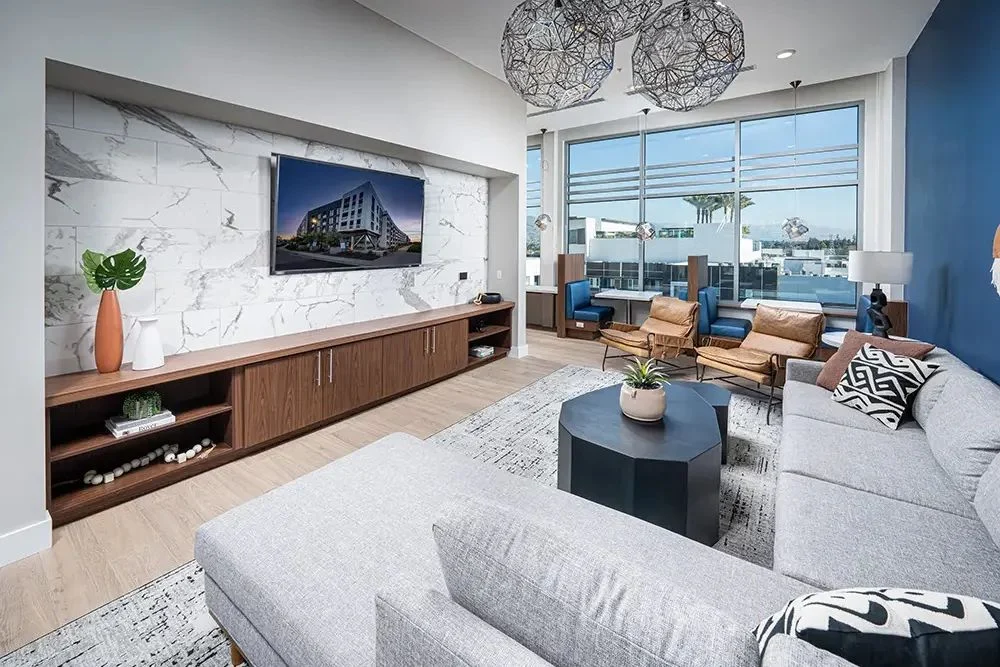
| Lounges | Layered ceiling light plus lamps and sconces on shared controls |
| Activity rooms | Bright, adjustable task light for crafts, cards and reading |
| Apartments | A lit path from bed to bath, task light at counters and closets, switches easy to find |
| Memory care | Very consistent light, few shadows and plenty of daylight as a calming cue |
Shadows in memory care deserve their own note. A hard shadow across the floor can look like a step or a hole to someone living with dementia. Soft, even lighting removes a lot of that confusion before it starts.
Controls and switches
- Put switches where people expect them, at the door of each room and at a comfortable height.
- Use lighted or contrasting switch plates so they’re easy to find in the dark.
- Give staff simple control of common areas, with day and evening scenes if the budget allows.
- In apartments, a switch by the bed that lights the way to the bathroom is worth every penny.
The year-four view
LED fixtures last a long time, but quality varies a lot. Cheap fixtures can flicker, drift in color or fail early, and replacing one mismatched fixture in the middle of a lounge is a bigger job than it sounds. Buying fewer, better fixtures and sticking to a consistent lamp family keeps maintenance simple for years and keeps the rooms looking the way they did on opening day.
In 31 years we’ve noticed that the rooms residents love best usually have the best light.