
A prospect spends a few minutes in the model, and in those minutes they decide whether this is home. They’re not studying the spec book. They’re asking simple questions. Will my couch fit? Is there room to work? Does it feel bright? Could I see myself here on a Sunday morning?
The model’s job is to answer yes to all of it, honestly. What we see separate the models that close from the ones that just look nice is a clear split between two kinds of decisions: what gets designed into the unit, and what gets staged inside it.
Start with the right unit
Before a single pillow gets picked, choose the model carefully.
Model the plan you need to lease most. The penthouse is fun to design, but the one bedroom that makes up the bulk of the building is where the leasing pressure lives. Model that plan at its best.
Watch the tour path. The model should be close to the leasing office and the amenity core, so the walk there shows off the building instead of a long corridor and a service door.
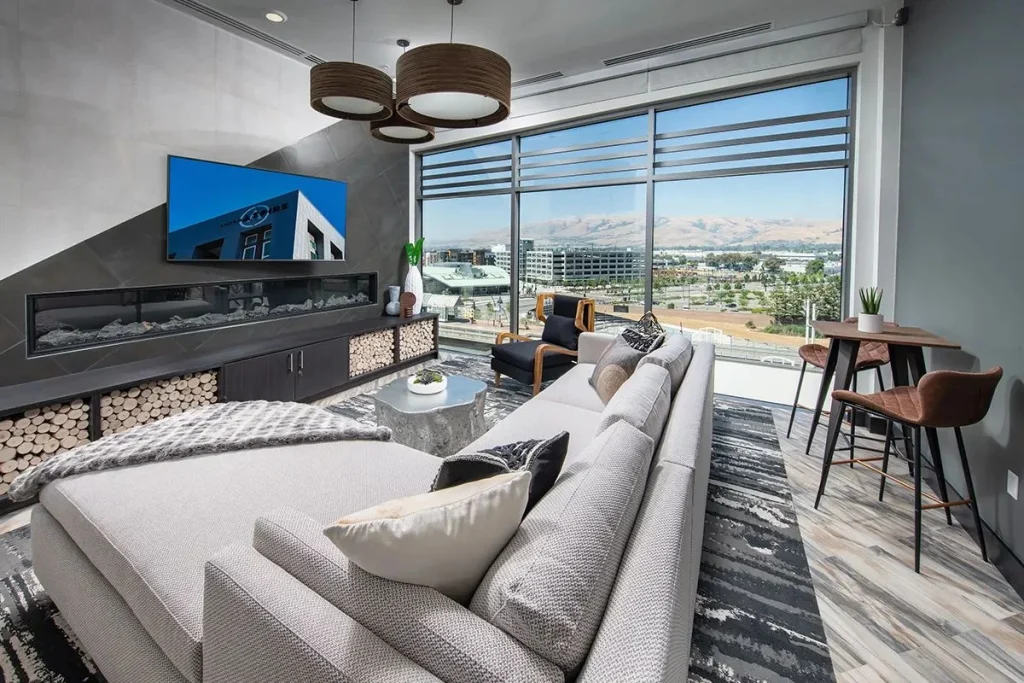
Consider the view and the light. A unit with good natural light and an inoffensive view does half the work for you. A unit facing a parking deck makes the stylist fight uphill.
Think about a second model. In larger buildings, a second model in a different plan type helps prospects who are deciding between sizes. It also gives leasing a backup when one model is being refreshed.
What to design: the permanent layer
These are the things that stay when the interior designer leaves. They should match what the resident actually gets.
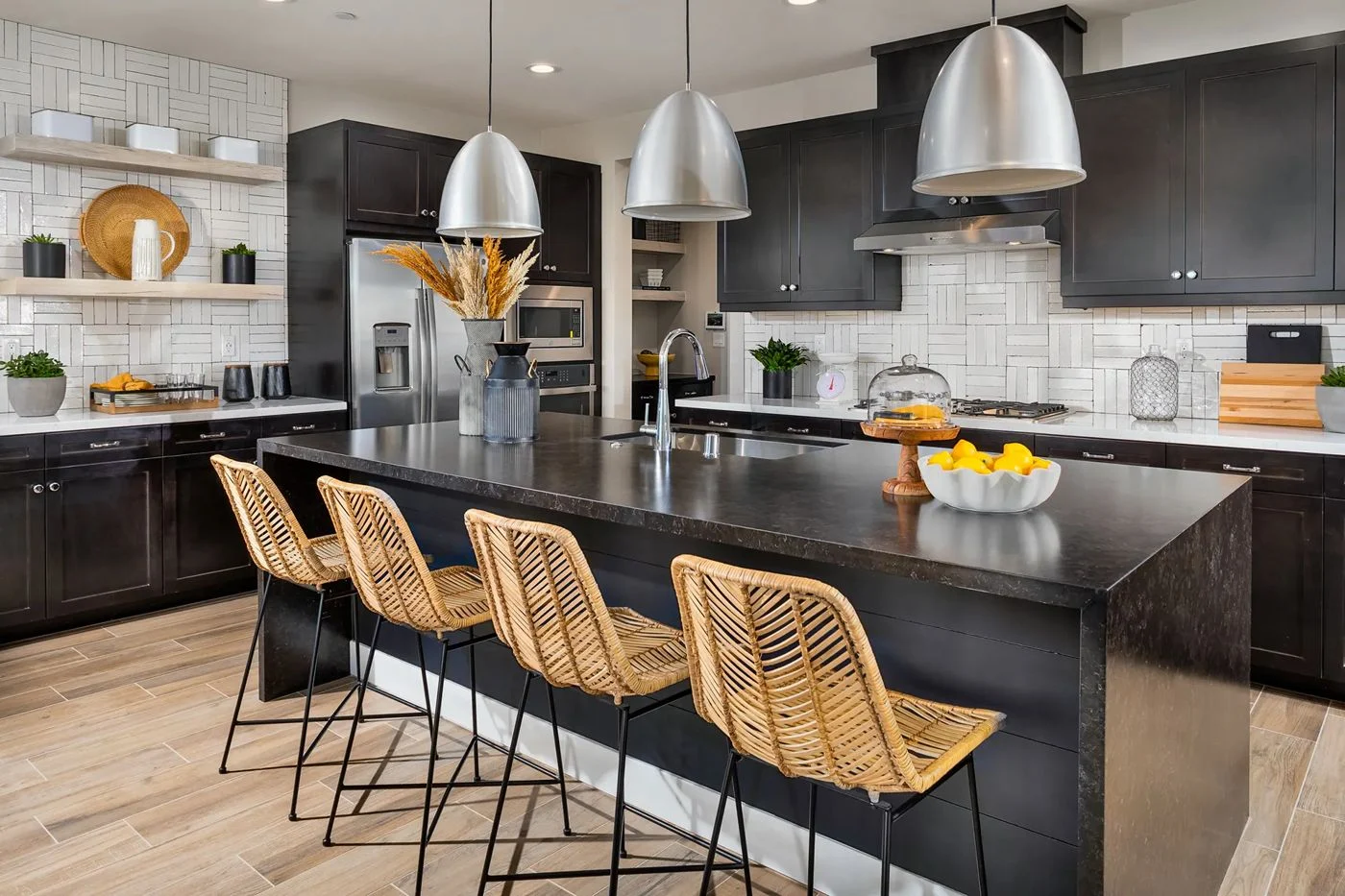
- Finishes. Counters, cabinets, flooring, tile and hardware should be the real package for that unit type. If the model shows the top tier and the unit they lease is the base tier, you’ve created a move-in disappointment.
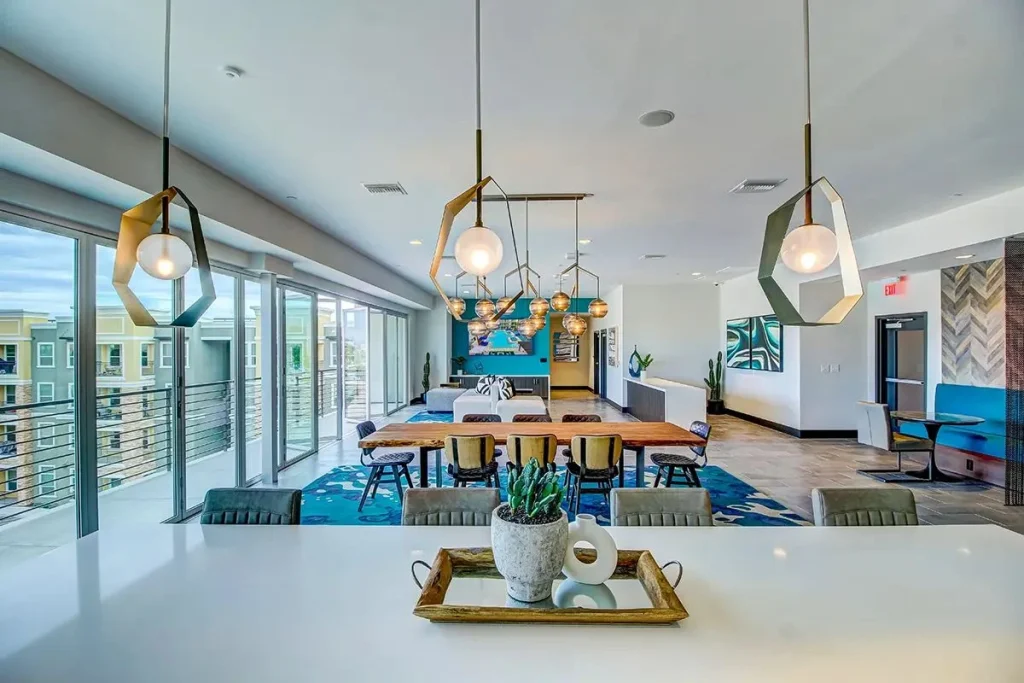
- Lighting. The real fixtures, properly aimed, plus a lighting plan that works for evening tours. Dark models lease slower.
- Window coverings. Real shades or blinds in the actual spec, so the prospect sees what privacy and light control look like.
- Layout proof. The model unit should already accommodate a queen bed with nightstands, a real sofa and a place to eat. If the designed plan can’t prove that modeling the unit will only hide the problem until move-in.
- Storage. Closets and pantry built as specified. Prospects open doors.
What to Model: the temporary layer
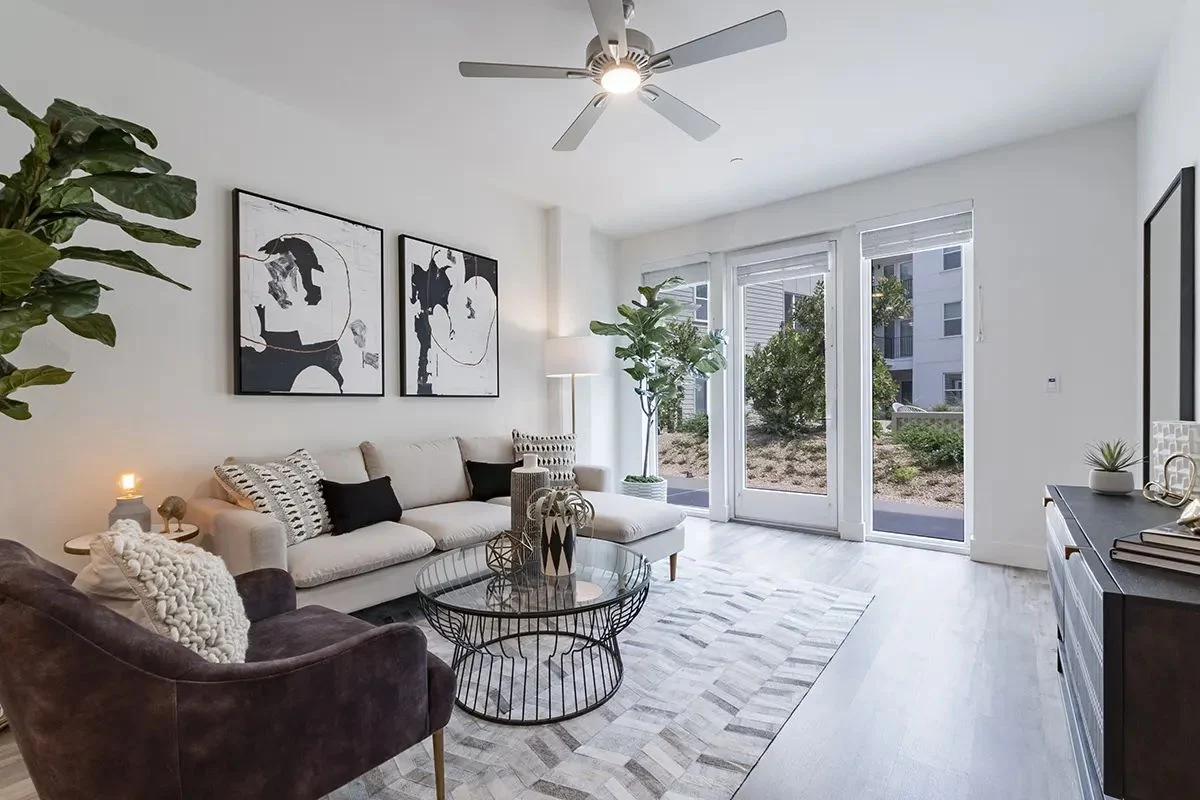
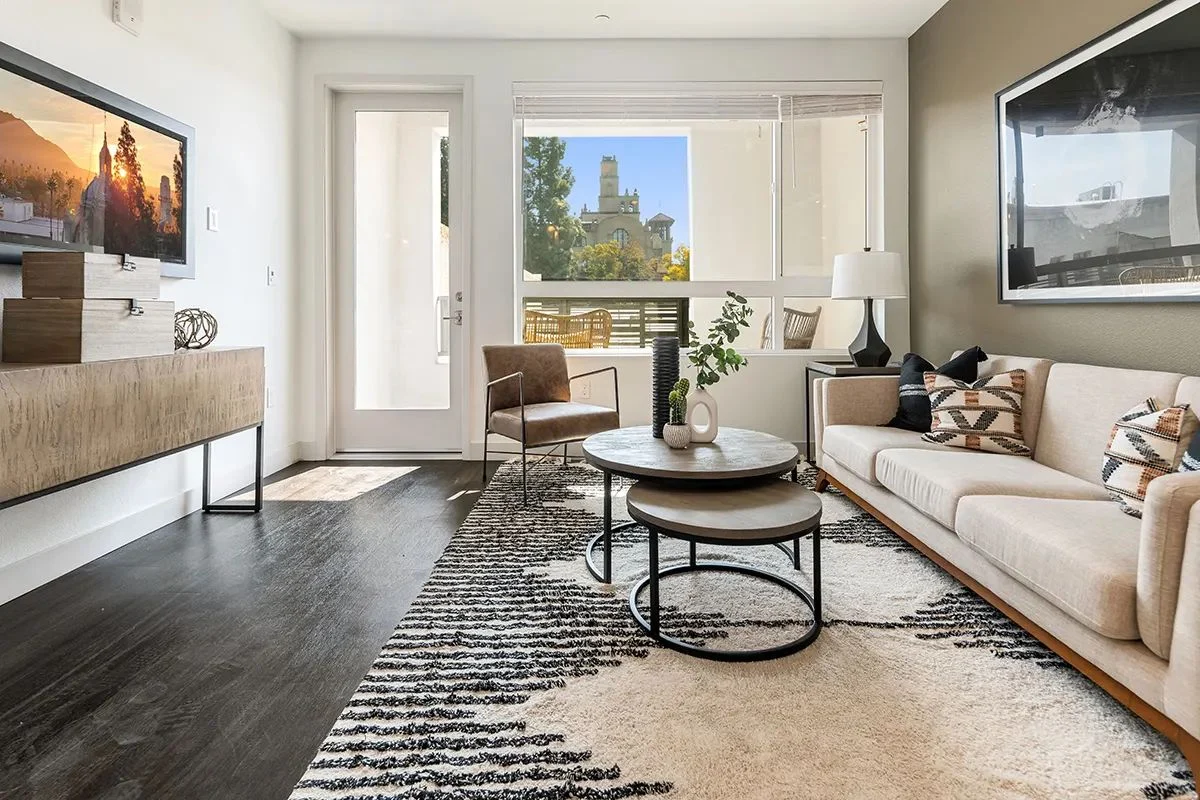
Model styling is where personality comes in, and where you tell the prospect who lives here.
- Furniture scaled to the room. Real-size pieces, not undersized furniture that makes the room look bigger than it lives. Renters measure. They’ll find out.
- A work corner. A desk or a work surface that shows remote work is possible without taking over the living room.
- Art and accessories with restraint. Enough to feel lived in, not so much that the prospect can’t see the room.
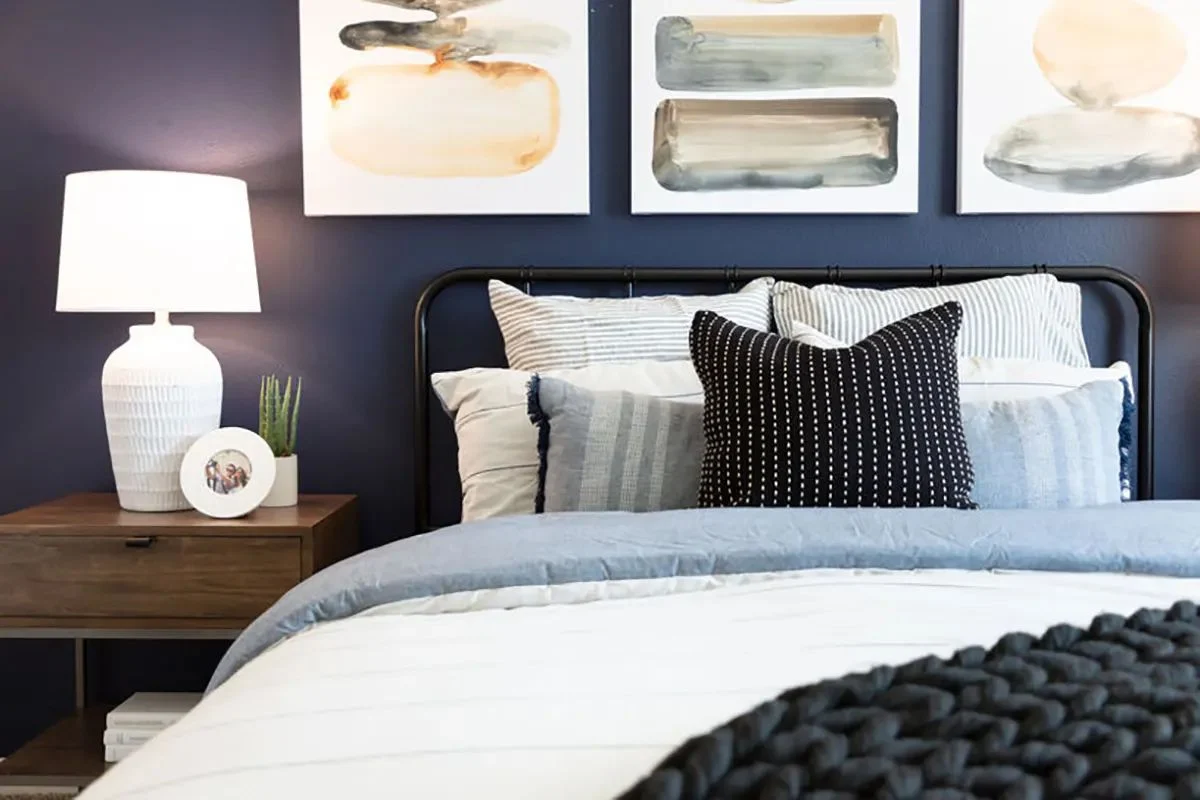
- Soft goods. Area rugs, throws and bedding that add warmth and soften sound.
- Tiny stories. A coffee setup on the counter, a leash by the door in a pet-friendly building, a bike hook if the building has cyclists. These make the renter profile visible.
The design proves the unit works. The model styling proves somebody would love living in it.
Design vs. styling at a glance
| Element | Design it in | style it |
|---|---|---|
| Counters, cabinets, flooring | Yes, match the real package | Accessorize |
| Light fixtures | Yes, actual spec | Add lamps for warmth |
| Window coverings | Yes, actual spec | Add drapery panels if it helps |
| Furniture | Plan for it in the layout | Yes, true to scale |
| Art and accessories | Plan blocking for heavier pieces | Yes, with restraint |
| Workspace | Plan power and space | Yes, show it set up |
Honesty is a retention strategy
This is the part that matters most to us. A model unit that oversells creates a resident who feels misled on day one. That feeling shows up at renewal. A model unit that shows the real finishes, real dimensions and real light, dressed beautifully, creates a resident whose first impression of their own unit is “this is what I saw.” That’s a good start to a long tenancy.
If you do want to show upgrades, label them. Leasing can say, “this is our premium package, available on these floors.” Clear beats clever.
Keep the model fresh
Model units take a beating. A steady stream of prospects, doors opening and closing, the occasional kid bouncing on the bed. Plan for it.
- Use durable staging pieces. Performance fabrics and solid frames last through a long lease-up.
- Set a refresh schedule. Rotate accessories and bedding annually so the model never looks tired.
- Keep a spare kit. Replacement pillows, lamps and accessories on hand for quick swaps.
- Photograph it well. The model often becomes your listing photography. Shoot it at its best, early.
How we work on model units
Because we handle FF&E procurement and install, we treat the model unit as a small project of its own. We plan the layout with the unit design, source the furniture with the rest of the building’s furniture and install it on a schedule that fits the leasing team’s first tour date. Over 31 years, we’ve found that the model units that the leasing agents love are the ones that make their job easy: honest, warm and ready to show at a moment’s notice.
The short version
- Model the plan you need to lease most, on a strong tour path with good light.
- Design in the real finishes, lighting, window coverings and a layout that proves furniture fits.
- Stage with true-scale furniture and small stories about the renter, and keep it honest.
We still get a little thrill when a leasing agent tells us a prospect signed before they left the model. That’s the whole point.