
If you build apartments continuously, you’ve probably worked with a few interior design firms already. Some were great. Some produced beautiful boards and then struggled when the drawings met the field. A few may have been used mostly as a second price.
Choosing the right partner matters more than it might seem on a fee sheet. The interior design firm touches the rooms that drive the tour, the finish packages that drive rent and the FF&E budget that has to land on the number. What we see separate the partnerships that produce buildings hitting pro forma from the ones that don’t is less about taste and more about how the firm works.
Here’s the checklist we would use if we were on your side of the table.
Multifamily focus, not multifamily as a sideline
Apartments are their own discipline. The best multifamily interior design firms understand amenity programming, unit finish tiers, the leasing tour, operations and turn costs, and the realities of a GC schedule. A firm that mostly does hospitality or custom homes may produce gorgeous work that isn’t tuned for how apartment buildings live and lease.
Ask: What share of your recent work is multifamily? Which product types: garden, mid-rise, podium, high-rise?
When do they want to be involved?
A firm that’s comfortable joining at schematic design understands where the real value is. The same change that costs about $1 at schematic costs $25 to $50 once construction is underway. Early involvement is where interiors shape the plan, the tour route and the services, not just the finishes.
Ask: At what phase do you usually join a project? What do you do at schematic?
Construction documents that hold up in the field
Beautiful concept boards are the easy part. Accurate, coordinated construction documents are what keep the GC on schedule and change orders off the log.
Ask: Can we see a sample interior design CD set? How do you coordinate with the architect’s backgrounds? Who does QA before a set goes out? How fast do you turn around RFIs?
FF&E procurement and install
Some firms design and hand off. Others design, specify, procure, track and install. When the same team handles both, the rooms come out matching the drawings, and there’s one party accountable when something goes sideways with freight or a back-ordered piece.
Ask: Do you handle procurement and install in-house? How do you manage lead times and substitutions? Who is on site on install day?
Budget honesty
The firm should be able to give you a realistic FF&E budget early and hit it. They should also be able to walk through value engineering without gutting the design, telling you clearly which cuts are safe and which ones will cost you later in durability or leasing appeal.
Ask: How close have your early FF&E budgets been to final cost on recent projects? Walk us through a VE decision you pushed back on.
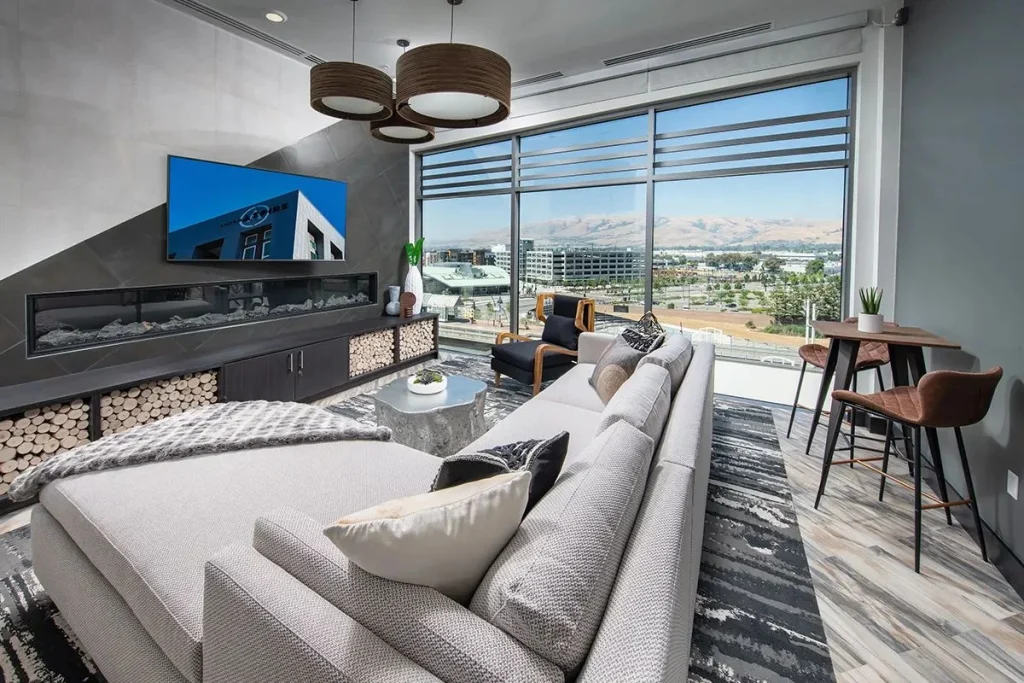
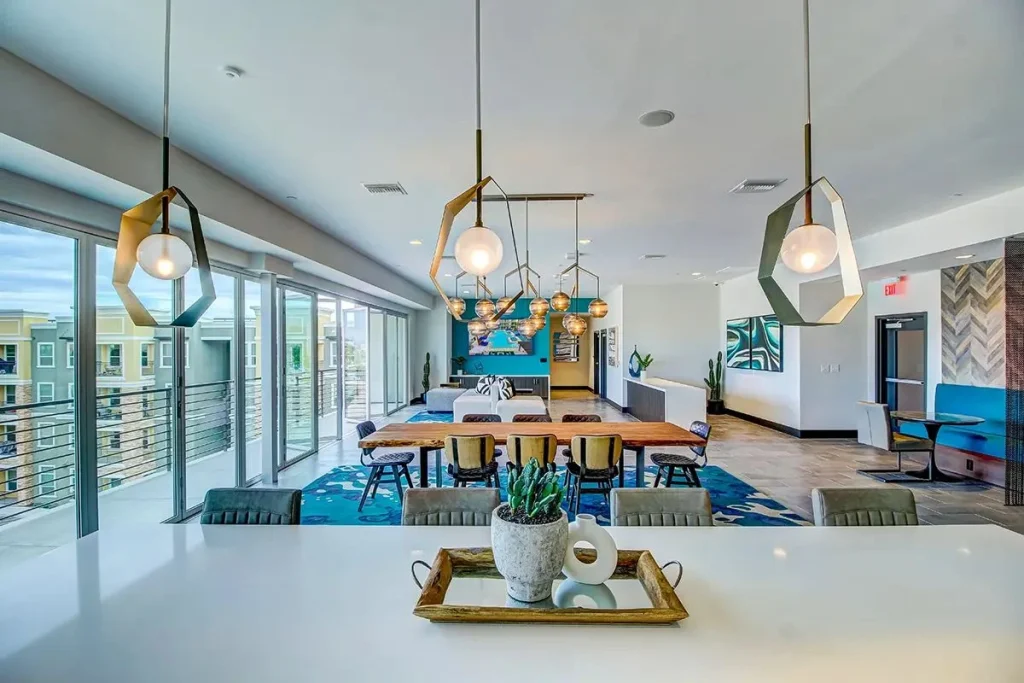
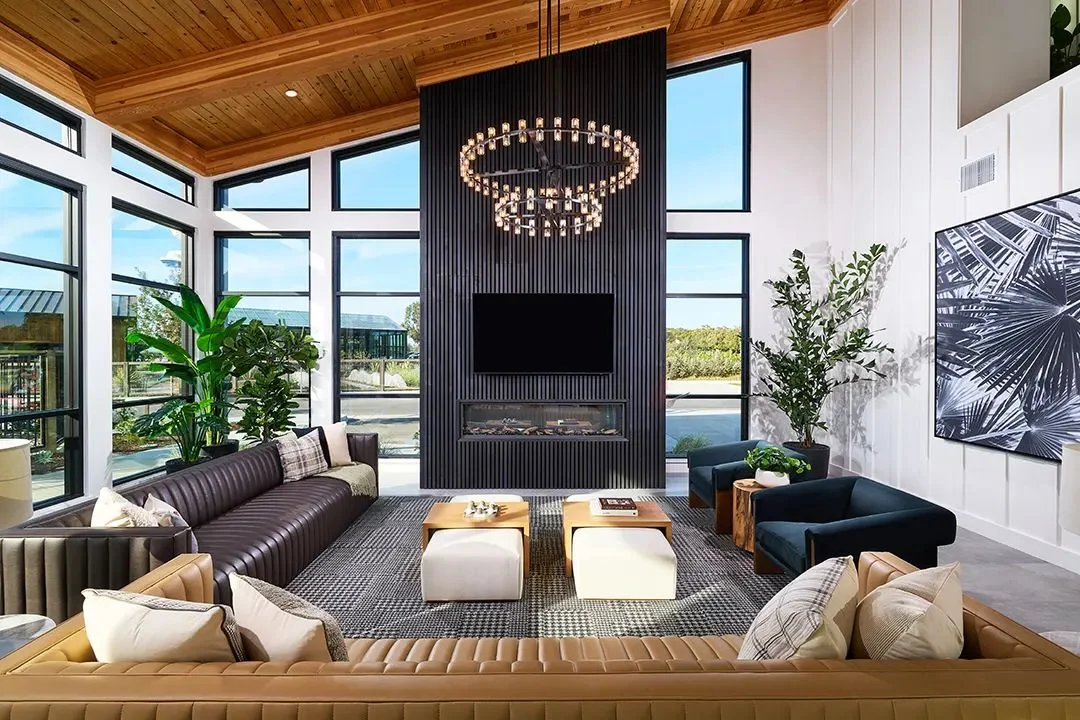
Real photos, real buildings, real references
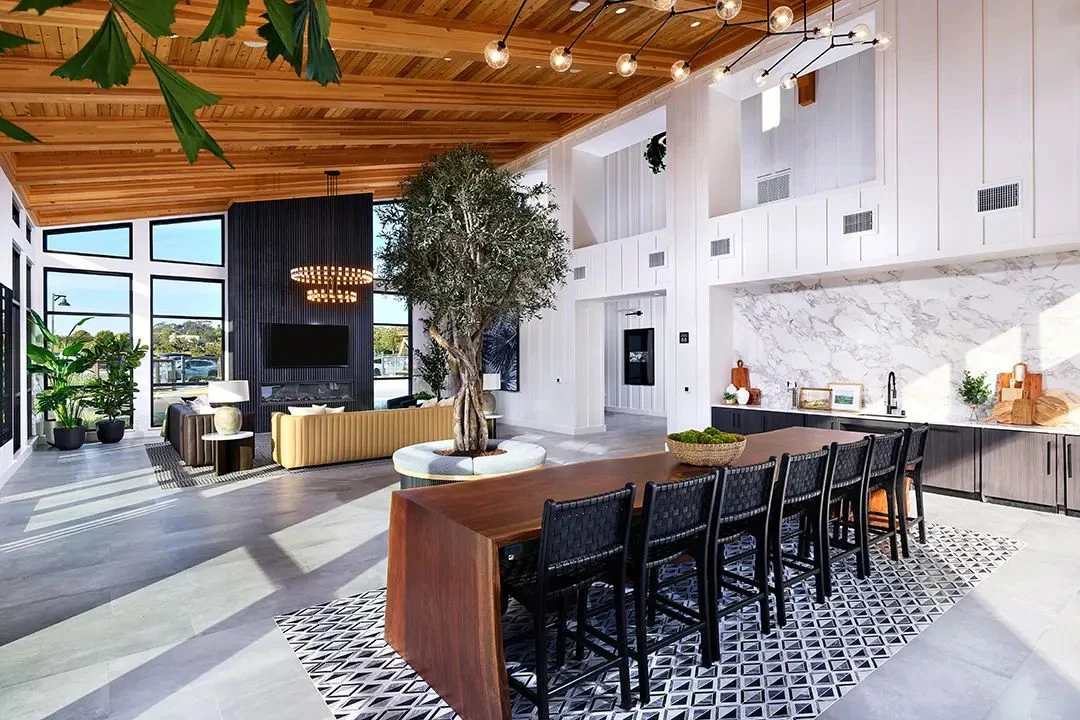
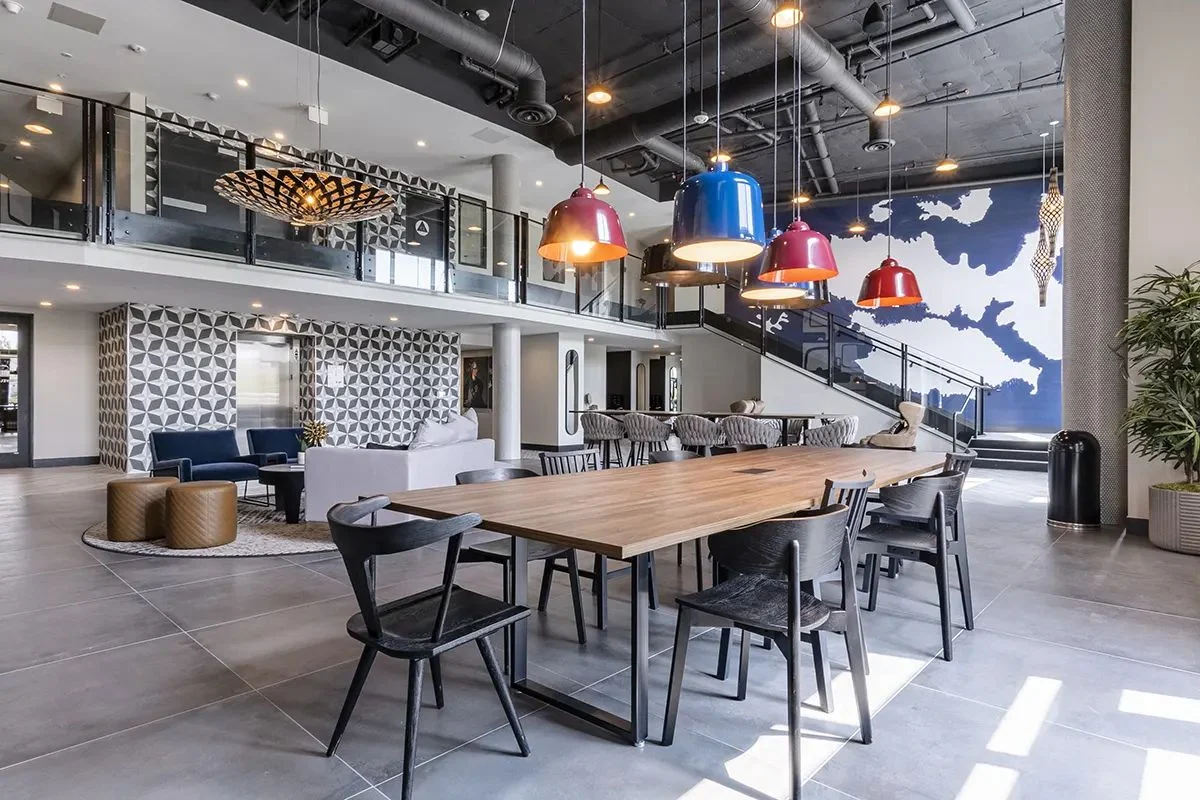
Renderings are useful, but photos of completed buildings show what the firm actually delivers. References from developers who have hired the firm more than once tell you even more.
Ask: Can we tour a completed building? Can we speak with a developer who’s used you on multiple projects?
The best reference for a design firm isn’t a single great project. It’s a developer who keeps hiring them.
A quick scorecard
| Question | A good sign | A red flag |
|---|---|---|
| Multifamily focus | Most of their work is apartments | Multifamily is occasional |
| Involvement | Comfortable at schematic | Only wants to start at finishes |
| CDs | Shares a sample set, has a QA step | Talks only about concepts |
| FF&E | Selects, Procures, and installs | Hands off a spec list |
| Budget | Early numbers they stand behind | Vague until after bid |
| References | Repeat developer clients | Only first-time clients |
| Team | You meet the people doing the work | The pitch team disappears after award |
Who will actually be on your project?
Ask to meet the people who will do the work, not just the principal who presents. Find out how many projects they’re carrying, and who you call when something needs a fast answer. Consistency of team is one of the most underrated factors in how smoothly a project runs.
Do they understand operations and leasing?
A multifamily interiors firm should ask about your renter profile, your comp set, your leasing strategy and how your property management team runs buildings. If the questions are all about color palettes, they may be designing for the photo shoot instead of the pro forma.
A little about how we answer these
We’ve been doing this since 1995, with more than 1,500 projects and 88 awards along the way. Most of our work comes from developers who have hired us before, and we think that says more than any single photo. We join early, draw complete documents, procure and install the FF&E ourselves and try to be the easiest consultant on the team to work with. We’d be glad to walk you through any of it.
Choosing a design partner is a big decision, and we think the right one should make every project after the first feel easier.