
Picking an interior designer for an affordable project is a bigger decision than it looks. The right firm protects your budget, speeds up your schedule and gives you a building you’re proud to put in the next application. The wrong one gives you pretty renderings and a pile of change orders.
Here’s a practical guide to telling the difference, including the questions we’d ask if we were in your seat.
1. Have they done affordable, specifically?
Market-rate experience is great, but affordable has its own rules: cost limits, compliance periods, accessibility percentages, resident services space and residents who stay for years. Ask to see affordable projects, not just beautiful ones.
Ask: “Show me three affordable projects you’ve designed and tell me what the budget constraint was on each.”
2. Do they talk about lifecycle cost?
A good affordable designer should talk about how finishes hold up in year five and year ten, not just how they look on move-in day. If the conversation is all about trends, that’s a warning sign.
Ask: “Which finishes do you avoid on affordable projects, and why?”
3. When do they want to be involved?
The best firms want in early, at schematic design, because that’s when their work saves the most money. A firm that’s happy to show up after the drawings are done is telling you something.
Ask: “What do you do at schematic design, and what does it save us?”
4. How good are their construction documents?
Pretty boards don’t build buildings. Accurate, coordinated drawings do. Ask to see a sample set and look for matching schedules, flooring transitions and blocking plans.
Ask: “Can we see a sample drawing set from a recent affordable project?”
5. Do they handle FF&E from start to finish?
Selecting the furniture is half the job. Procuring it, tracking lead times, receiving it and installing it on schedule is the other half. Find out whether the firm does all of it or hands you a shopping list.
Ask: “Who orders, tracks, receives and installs the FF&E, and how do you protect our move-in date?”
6. Who defends the design when the budget moves?
Every affordable project hits value engineering. You want a designer who can find savings without stripping the durability and warmth out of the building.
Ask: “Tell us about a VE round where you found savings and kept the design.”
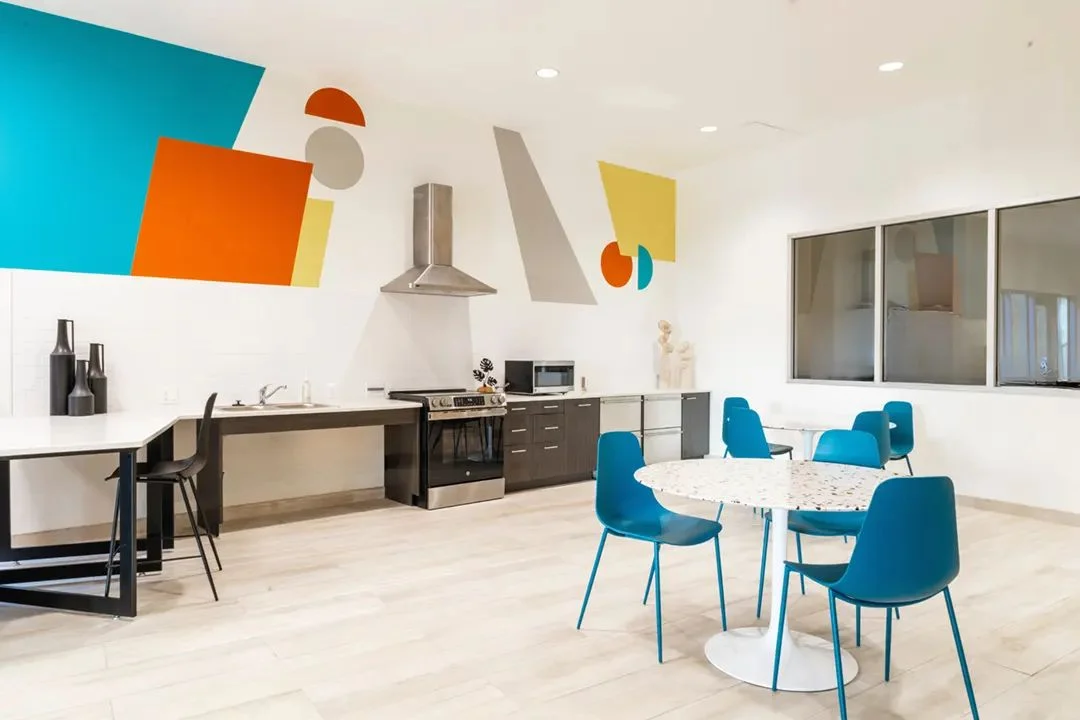
7. Does their work feel like home?
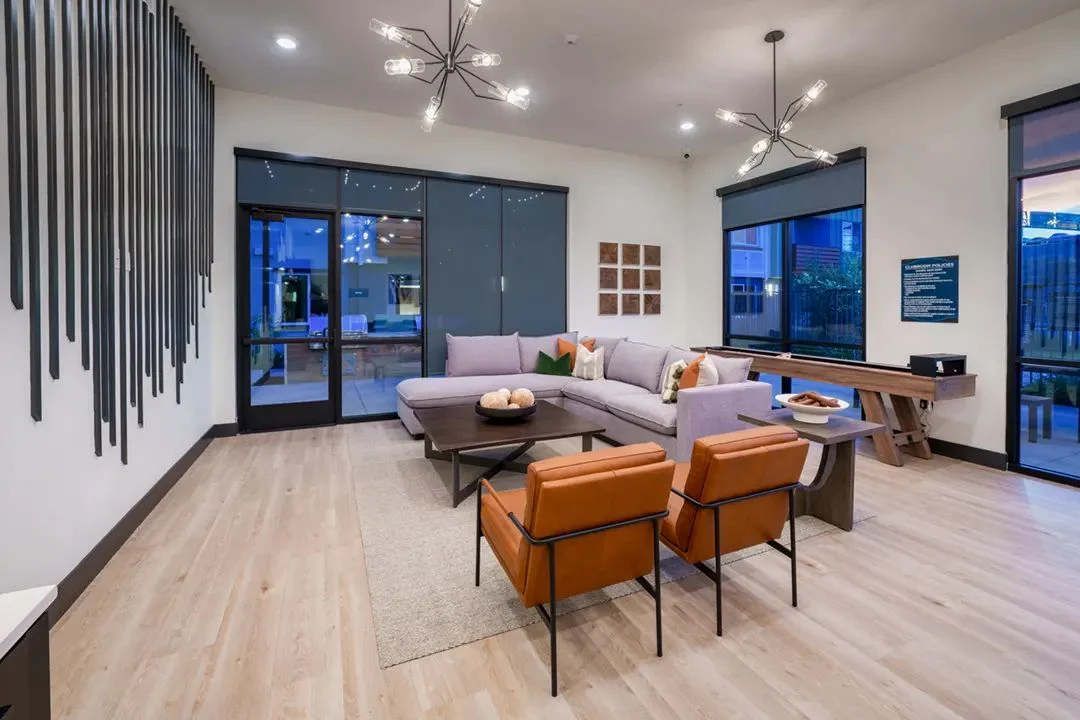
Walk their installed projects or study their photos. Do the lobbies feel like living rooms or waiting rooms? Affordable residents deserve homes, and good design firms know how to deliver that on a tax credit budget.
8. Can they prove it?
Awards, repeat clients and references from other affordable developers say more than any pitch.
Ask: “Which affordable developers have hired you more than once?”
The right firm should make your job easier: fewer change orders, fewer surprises and a building that photographs beautifully at lease-up.
A simple scorecard
| What to look for | Strong answer | Weak answer |
|---|---|---|
| Affordable experience | Many built projects, real budgets | Mostly market-rate |
| Finish philosophy | Lifecycle cost and durability | Trends and looks |
| Timing | Wants to start at schematic | Fine starting at CDs |
| Documents | Coordinated, complete sets | Boards and renderings only |
| FF&E | Full procurement and install | A product list |
| Value engineering | Finds savings, keeps the design | Cuts whatever is asked |
| Proof | Awards, repeat clients, references | Nice photos only |
A little about us
Since you’re reading this on our website, we should be upfront: we’d love to be on your shortlist. Catalina Design Group has designed apartment interiors since 1995, with 1,500 projects, 88 awards and more than 1,000,000 happy residents. Central Apartments in Los Angeles won the 2025 Gold Nugget Grand Award for Best Supportive/Transitional Housing. But whoever you choose, ask these questions. The right answers will save you real money.
Our question for youWhat’s the most important thing you look for when hiring an interior designer?