
A student building gets a brand-new community every year. Most of the residents didn’t know each other in July. Some are away from home for the first time. A few will spend the first week in their room, wondering if everyone else already has friends.
The common areas are where that changes. Good social spaces make it easy to bump into people, easy to stay and easy to come back. Bad ones are big, expensive and empty on a Thursday night.
After 31 years of designing places where people live together, here’s what we see separate the rooms that fill up from the ones that don’t.
Make joining in easy
The best social rooms lower the stakes of walking in. A student should be able to enter, sit near people without committing to a conversation and drift into one if it happens.
- Soft edges. Seating at the perimeter of an activity, like stools along a counter or a sofa near a game table, lets people watch before they join.
- Something to do with your hands. A pool table, a coffee station, a puzzle table or a kitchen gives people a reason to be there that isn’t “trying to make friends.”
- Visibility from the path. If students can see people inside as they walk by, they’re far more likely to come in.
- No dead ends. A room with a single entrance and no view in feels like a party you weren’t invited to.
Zones, not one big room
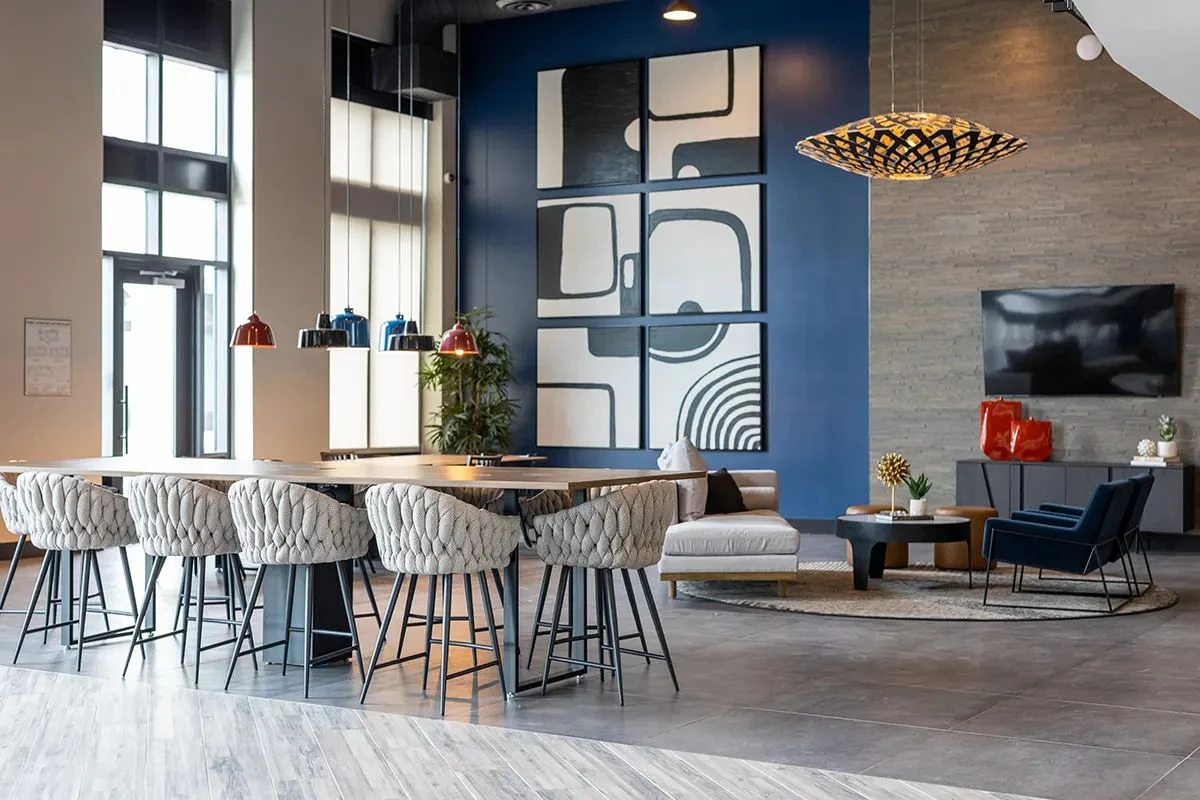
One huge lounge feels empty with ten people in it. The same square footage split into zones feels lively with ten people and still works with fifty.
| Zone | What happens there | What makes people stay |
|---|---|---|
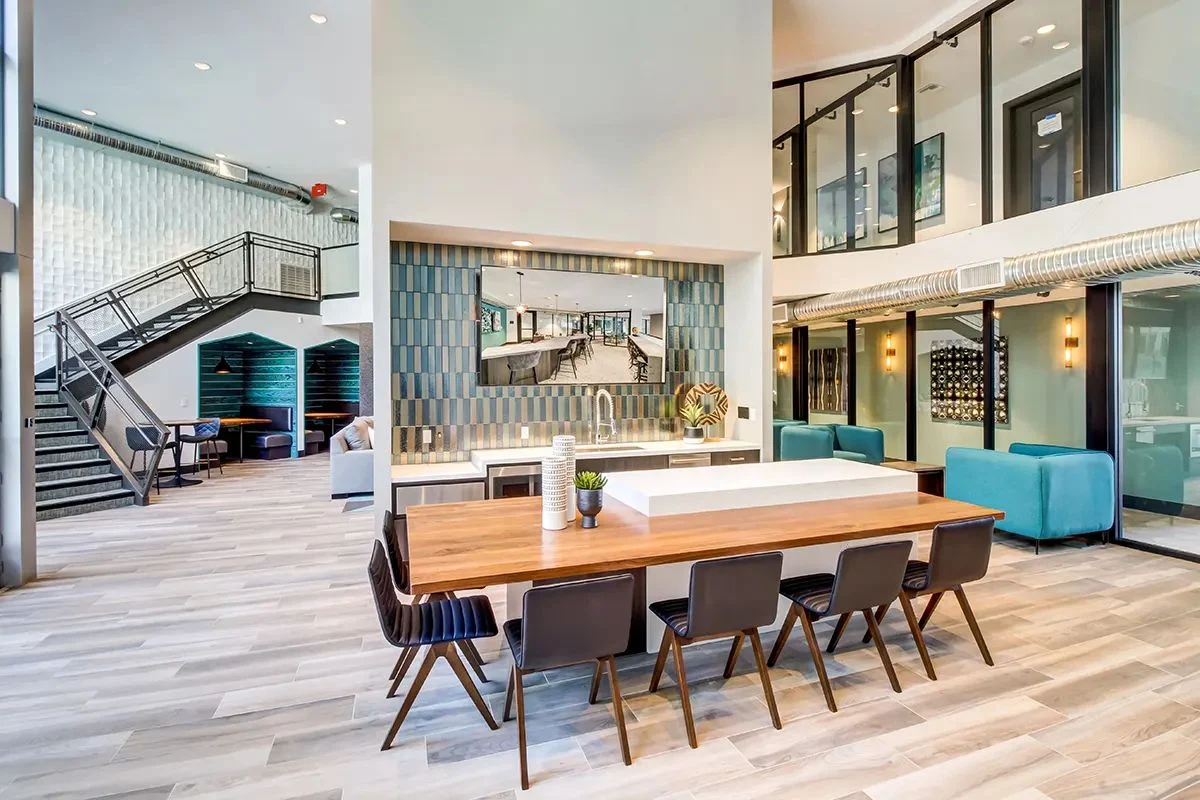
| Kitchen and bar | Cooking, snacks, events, late-night food | A big island, bar seating, good light |
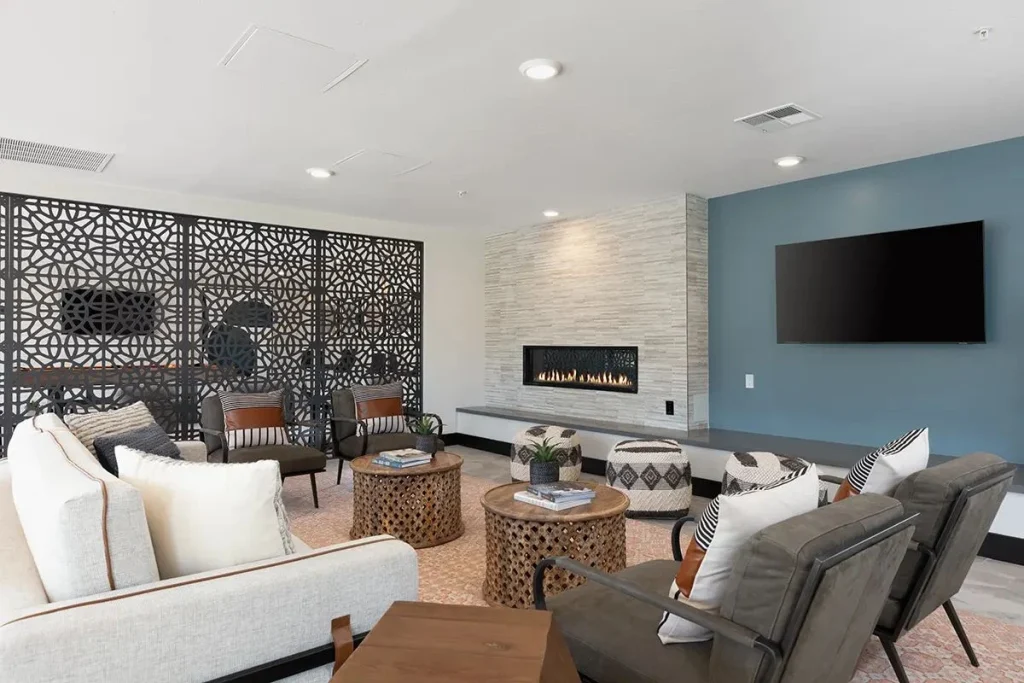
| Lounge | Hanging out, watching, talking | Deep seating, a big screen, lamps |
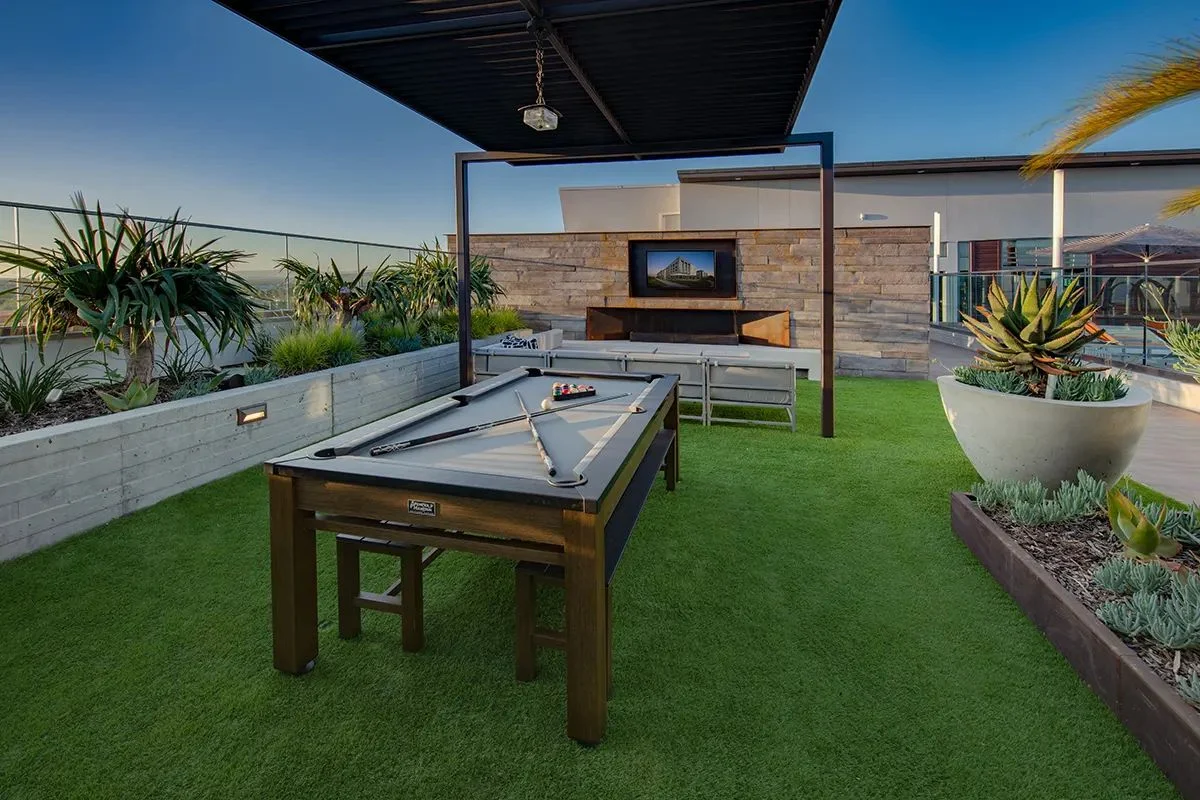
| Game area | Pool, table games, consoles | Seating around the edges for spectators |
| Tables | Eating, studying, playing cards | Power, durable tops, comfortable chairs |
| Nooks | Small groups, phone calls, quiet chats | Booths, high backs, softer light |
Zoning also helps the building on slow nights. A few people in a cozy nook feels right. The same few people in the middle of a vast room feels like a waiting area.
The kitchen is the magnet
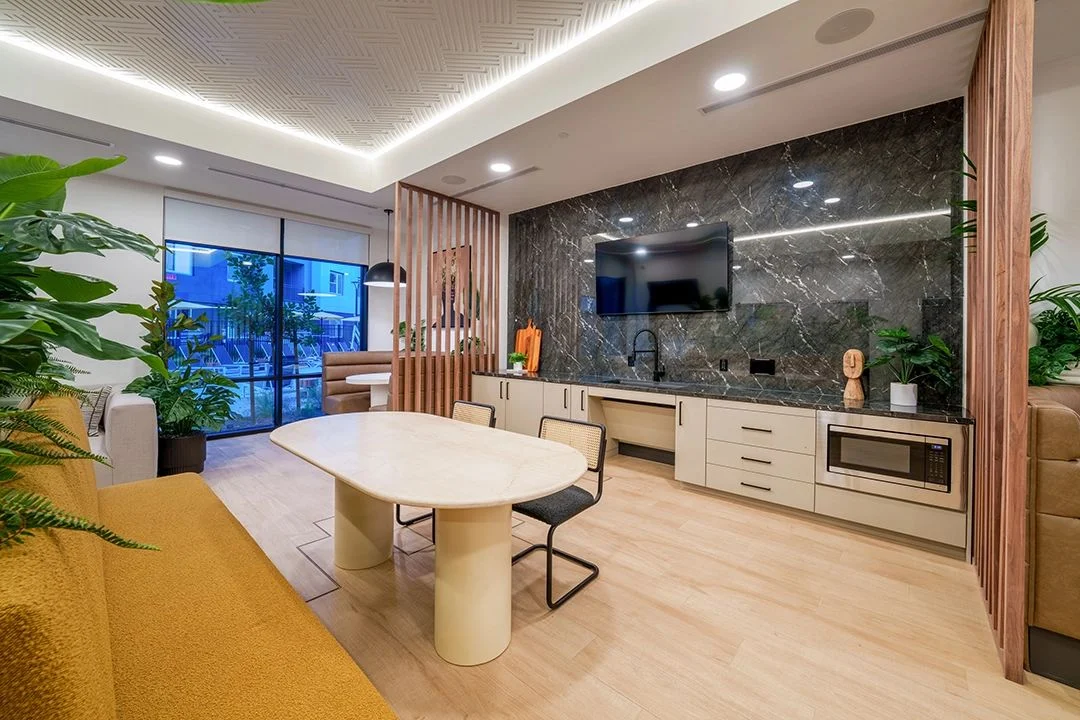
If we had to pick one social space to get right, it would be the shared kitchen. Food brings people together faster than anything else. Resident events, a floor dinner, someone baking cookies at midnight, a watch party with snacks.
Design it like a real kitchen, not a break room. A generous island people can gather around, bar seating on the outside, durable counters, easy-to-clean surfaces and enough storage that it doesn’t turn into a mess. Put it where people pass by, and let the smell of popcorn do the marketing.
Community isn’t a room you program. It’s a room people keep choosing on a random Tuesday.
Design for the first two weeks
The early weeks of the year matter more than any others for community. That’s when friendships form, and that’s when residents decide if the common areas are “theirs.”
Plan for events: movable furniture, power for a DJ or a projector, a place for a welcome table, room for a crowd. Then make sure the space works on a normal night too, when there’s no event and a handful of residents drift in.
Your residents will also meet each other in the less glamorous spaces. Mail and package areas, laundry rooms and elevator lobbies get daily traffic. A bench, good light and a bulletin board can turn a chore into a chance encounter.
Outdoor rooms count
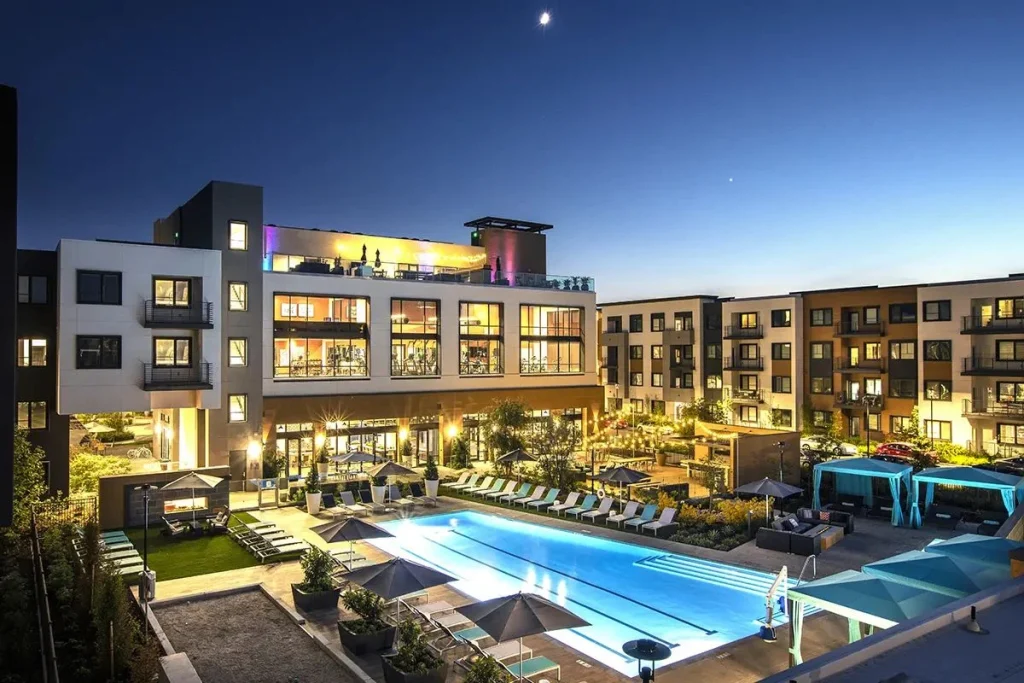
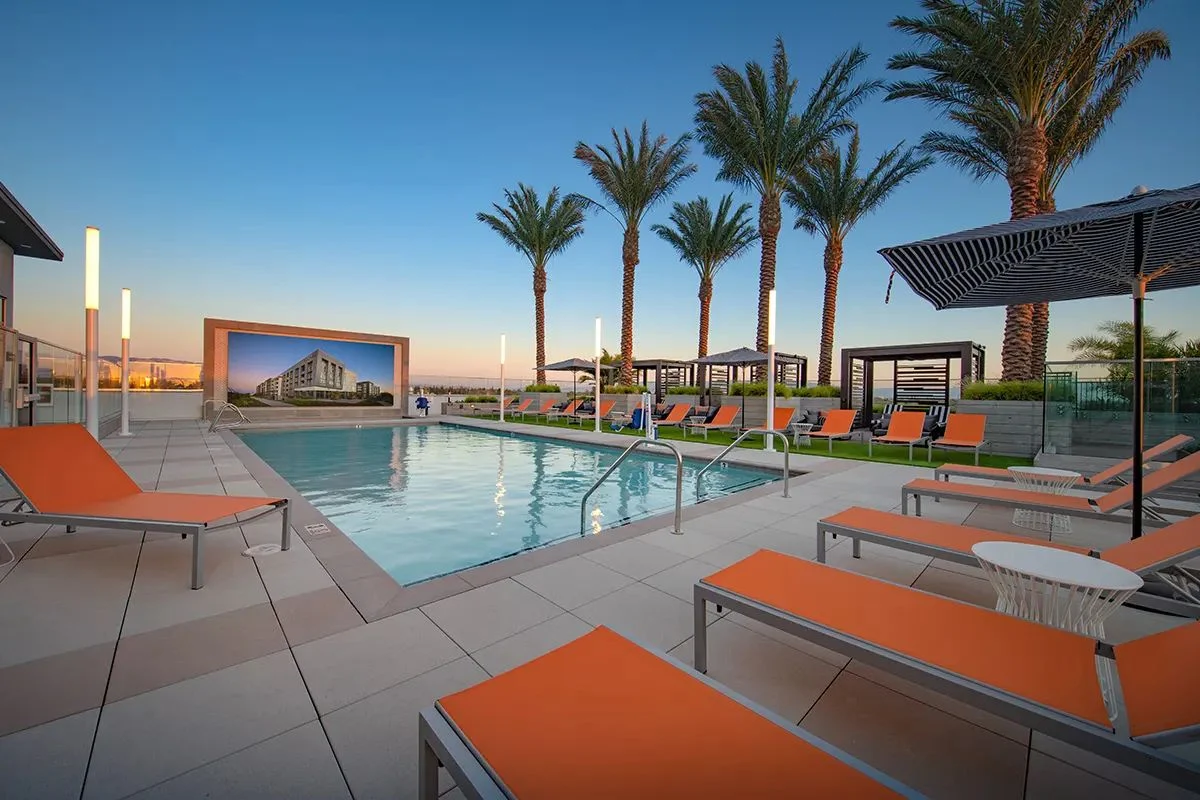
Courtyards, roof decks and patios can be the most social spaces in the building, especially on the West Coast and in Hawaii, where good weather lasts most of the year.
- Shade so the space works in the afternoon.
- Seating groups instead of rows.
- A fire feature or grill as a focal point.
- Lighting that makes the space inviting after dark.
- Durable outdoor furniture that can take sun, rain and the occasional table-top dance.
Tough and warm at the same time
Social spaces take the most abuse in a student building. Furniture gets moved, stood on and slept on. Surfaces see spills and sticky fingers. It’s tempting to solve that with hard, bare, institutional finishes.
We don’t. Like a home, not a facility: that is our standard. That means commercial frames and performance fabrics that look like home furniture, washable walls in colors people like, flooring that hides wear and lighting that feels like a living room, not an office. The room should be tough enough to be loved hard and warm enough that people want to.
Social spaces that work also help beyond the first year. Residents who feel at home are more likely to stick around and more likely to tell a friend about the building. That kind of word of mouth is hard to buy.
The best compliment a social room can get is a crowded couch and a pizza box nobody wants to admit is theirs.