Picture a couple on a Saturday afternoon. They’ve toured four model homes in two communities. On the drive home, one of them says, “I liked the one with the game room.” The other says, “Was that the one with the big shower?” Nobody mentions square footage. Nobody says Plan 2.
That conversation in the car is where a second visit gets decided. We call the rooms and moments that survive the drive home memory points. They’re why a buyer remembers your model out of a dozen, and why they come back with their parents, their checkbook, or both.
Why memory beats polish
A model can be handsome from end to end and still be forgettable. Polish is expected now. What buyers can’t find everywhere is a moment that sticks.
A Deep Brook Media and ECI presentation on the psychology of design made a useful point: buyers form an initial impression in about 95 seconds, and design works on them at three levels. Visceral is the instant reaction to color, light and smell. Behavioral is how the layout and furniture feel to move through. Reflective is whether the home fits who they want to be. The same presentation recommended giving a model a memorable hook, like a distinctive bar, primary suite or kitchen lighting.
The strongest memory points hit all three levels at once. A room that looks great, feels easy to use and matches the buyer’s picture of their own life is a room they’ll describe to a friend.
How many is the right number
Two or three per model is plenty: one at the front door, one signature room and one small surprise somewhere unexpected.
Past three, they cancel each other out. A model where every room shouts gets remembered as “the busy one.” Styling should feel curated, not cluttered, and that applies to big moments too.
| Memory point | Where it usually lives | What makes it stick |
|---|---|---|
| The first view | The entry and the sightline beyond it | A clear line to a feature wall, a light or the yard |
| The signature room | The room the target buyer wants most | A specific use, done all the way |
| The small surprise | A nook, stair, pantry or built-in | A detail nobody expected in a production home |
Start at the front door
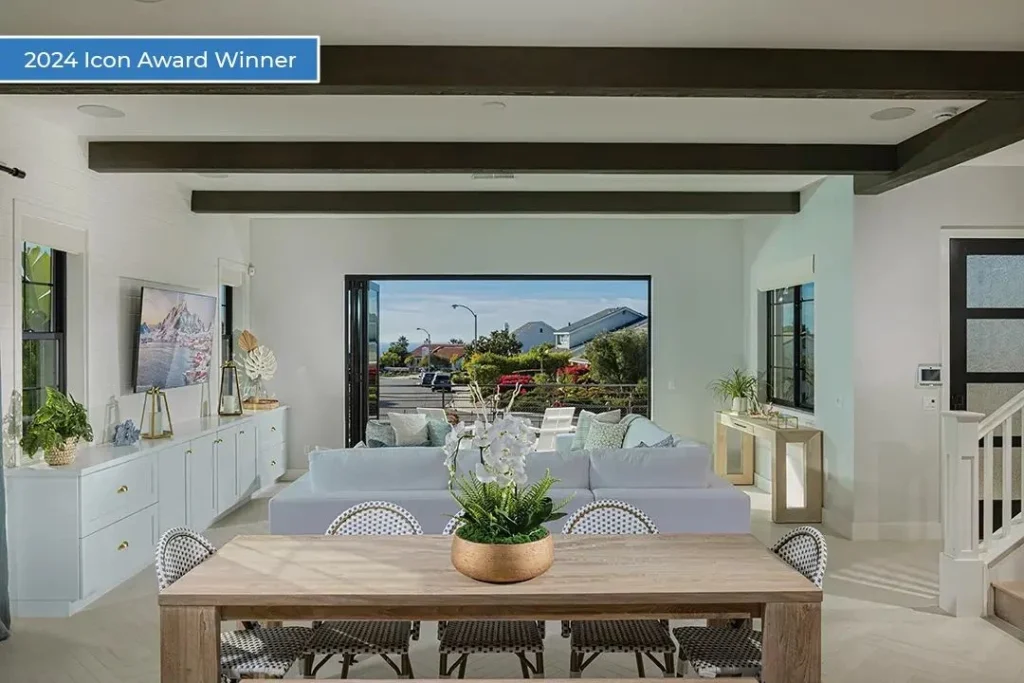
The first memory point is the one every buyer gets, so make it count. When the door opens, the eye should travel somewhere worth going: through the great room to the outdoor room, or straight to a feature element like a wall treatment, a lighting moment or a ceiling detail.
What kills it is clutter: a console piled with accessories, or a big piece of furniture blocking the view. The entry is the doorway to the memory, not the memory itself.
Give each model one signature room
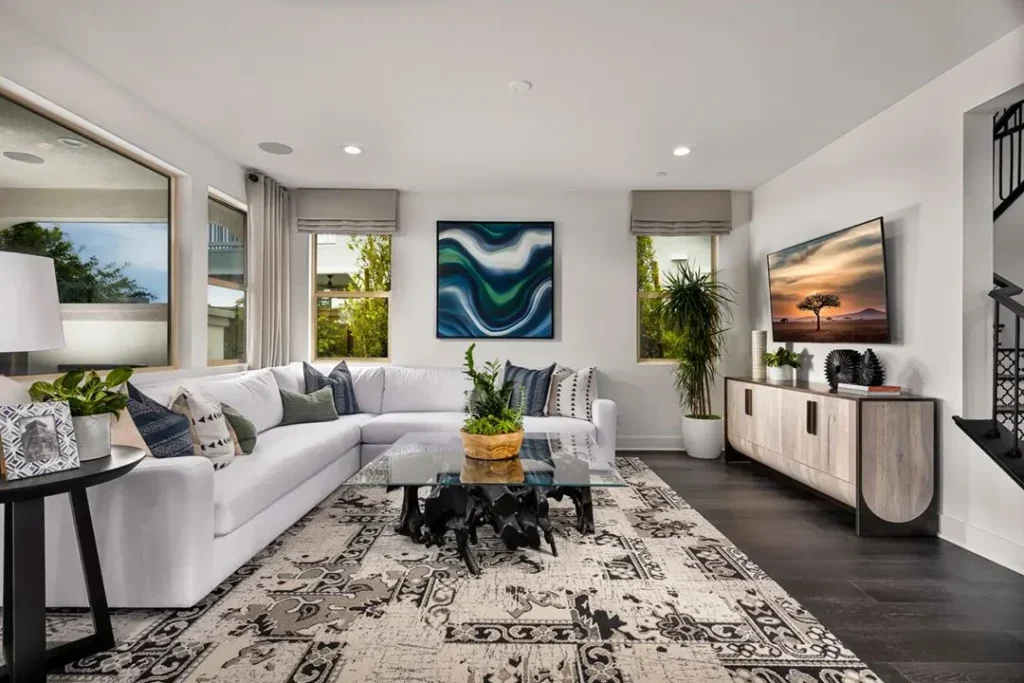
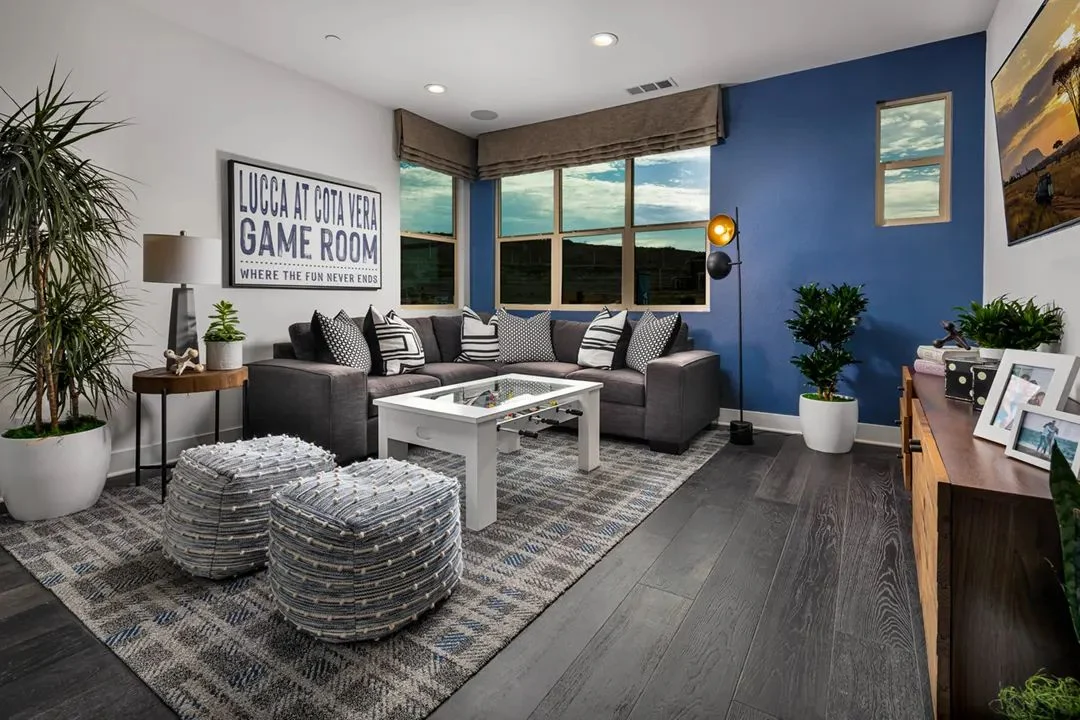
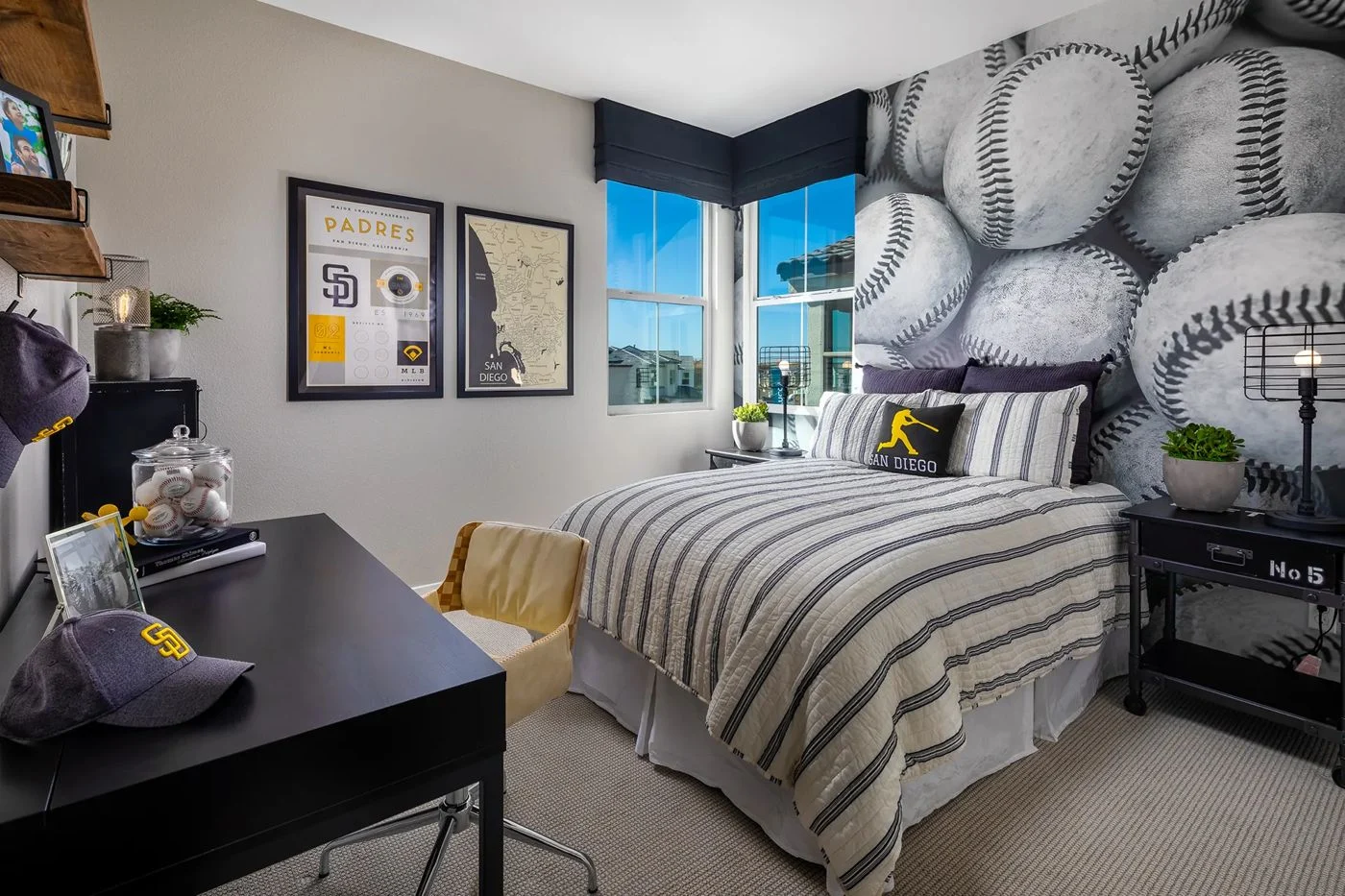
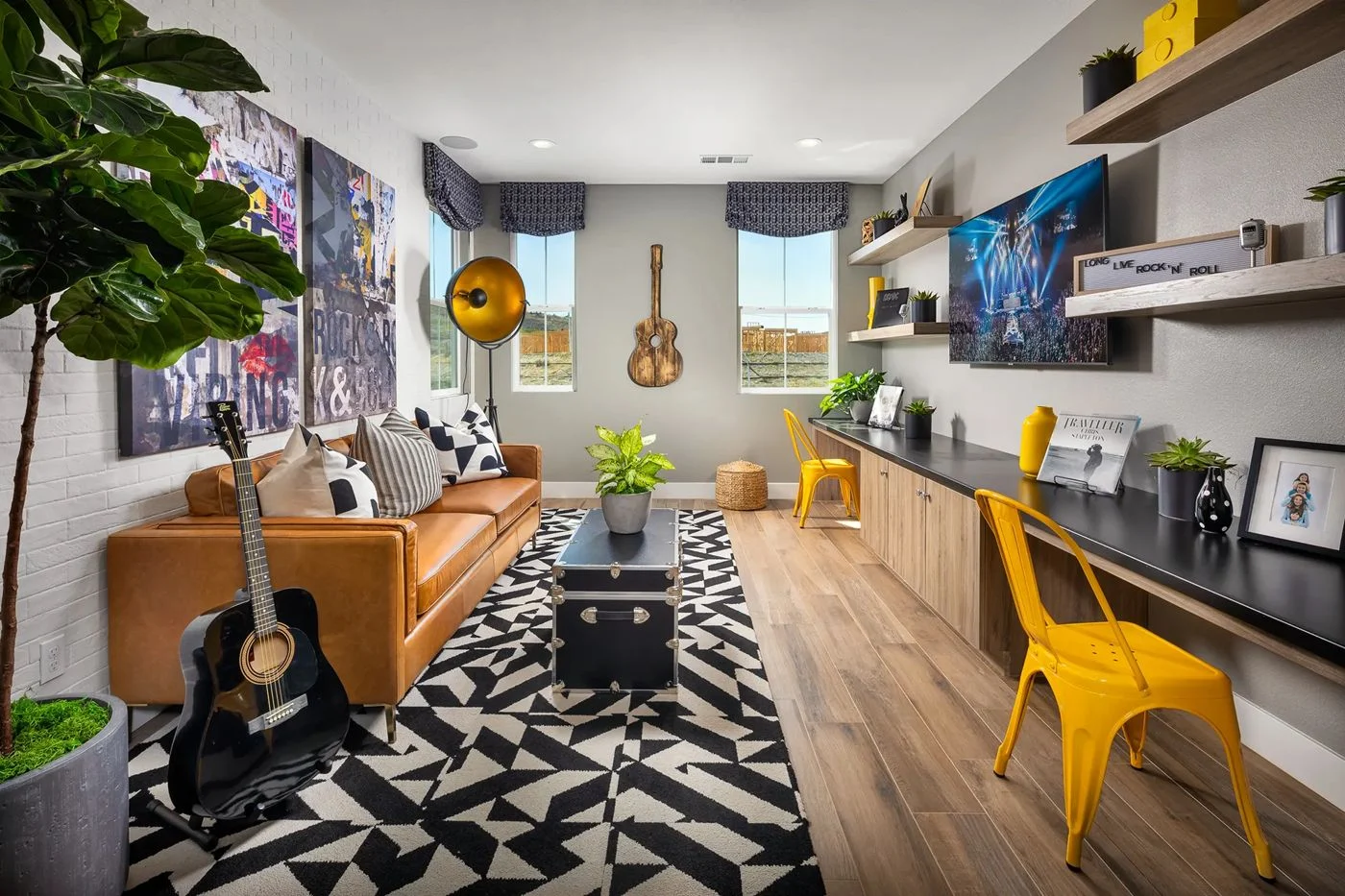
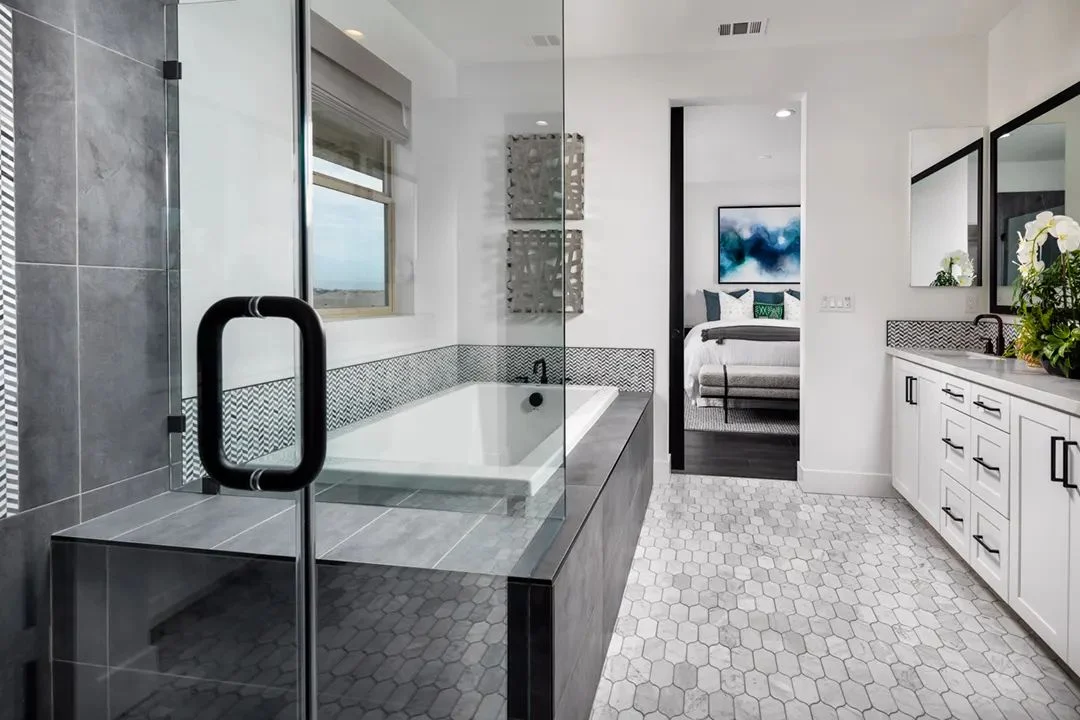
The signature room is the one buyers name in the car. It should differ from model to model so the homes don’t blur together. One owns the game room, another the primary bath, a third the teen lounge.
The trick is choosing the right room for the buyer touring that plan. A move-up family with kids nearing middle school will remember a teen space long after they forget the kitchen. Empty nesters may remember a primary bath that feels like a spa. A 2026 Zonda survey of single-family buyers, presented at the International Builders’ Show, found about 72% respond positively to steam or sauna concepts and about half want a tub in the primary suite. That’s a good hint about where some daydreams already live.
The small surprise
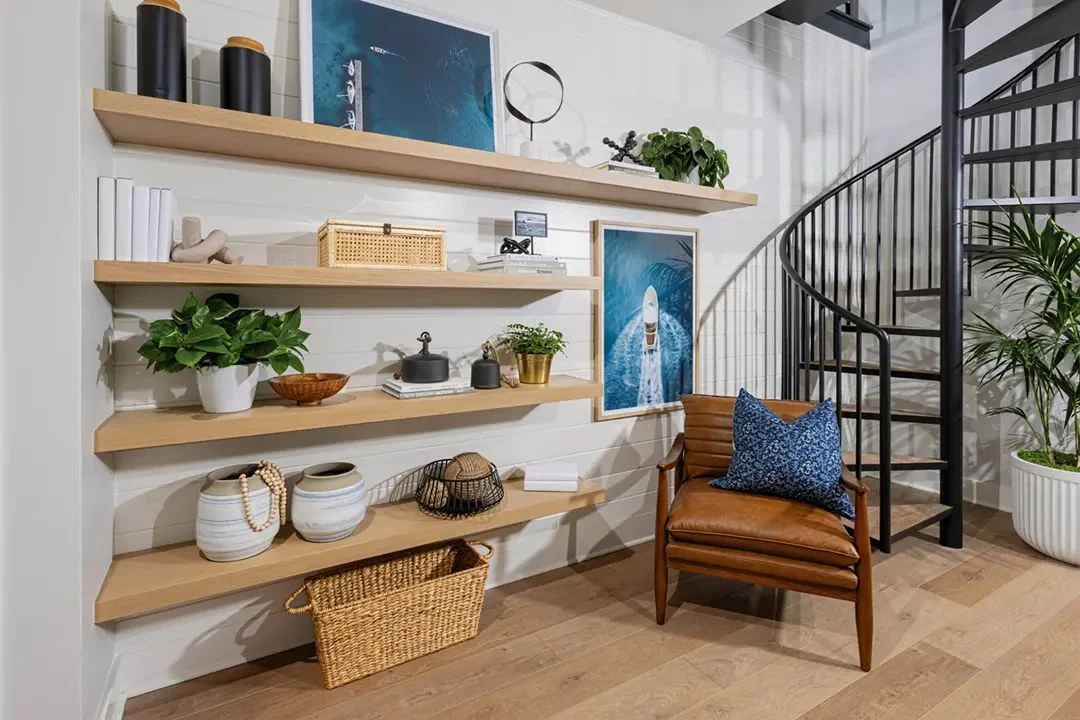
The third memory point is often the cheapest. Open shelving styled with real books instead of filler. A reading nook tucked under a stair. A coffee bar set up like someone actually makes coffee there.
These work because they’re unexpected and specific. Buyers expect a kitchen. They don’t expect a quiet corner that looks made for them. Zillow’s 2026 Home Trends report found listing mentions of reading nooks grew 48% year over year, so this one has some wind at its back.
If a buyer can’t describe your model to a friend in one sentence, it left them a floor plan, not a memory.
Don’t forget the senses
The visceral level is easy to overlook because it never shows up on a design board.
- Light. Lamps on, shades set for daylight without glare. A dark corner reads as a smaller house.
- Sound. Quiet music helps a model feel lived in. Keep it soft enough for conversation.
- Scent. Subtle and clean, or nothing. Strong fragrance is memorable for the wrong reason.
- Touch. Give buyers something worth picking up: a textured throw, a good fabric, a solid cabinet pull.
None of these cost much, and feelings are what people remember.
Memorable is not the same as gimmicky
A gimmick gets a laugh and then gets in the way. Here’s a simple test: does the moment point back at the house?
A good memory point shows off something the buyer can actually have: a feature of the plan, a finish the design studio sells, or a way of living the home makes easy. A gimmick shows off a prop that leaves with the furniture.
It also has to fit the story told by the architecture, the location and the target buyer. A signature room that wandered in from a different house will be remembered, just not fondly.
Find out what’s sticking
A recent Builder magazine piece made the point that buyers research online first, so models have to read on screen as well as in person. Memory points are the photos people stop scrolling on, and the rooms they look for when they walk in.
Your sales team is the best source on what’s working. Ask what buyers mention on the way out and what they ask to see again. If nobody brings up the room with the biggest budget, or everyone brings up a nook that almost got cut, that’s worth knowing.
The short version
- Memory points are the rooms and moments buyers still talk about in the car, and they drive second visits.
- Plan two or three per model: the first view, one signature room matched to the target buyer and one small surprise.
- Tie each one to the house and the buyer, so it reads as a reason to buy instead of a gimmick.
The best compliment a model can get is a buyer walking back in and heading straight for the room they couldn’t stop talking about.
Our question for youWhich room do buyers ask to see again when they come back to your models?