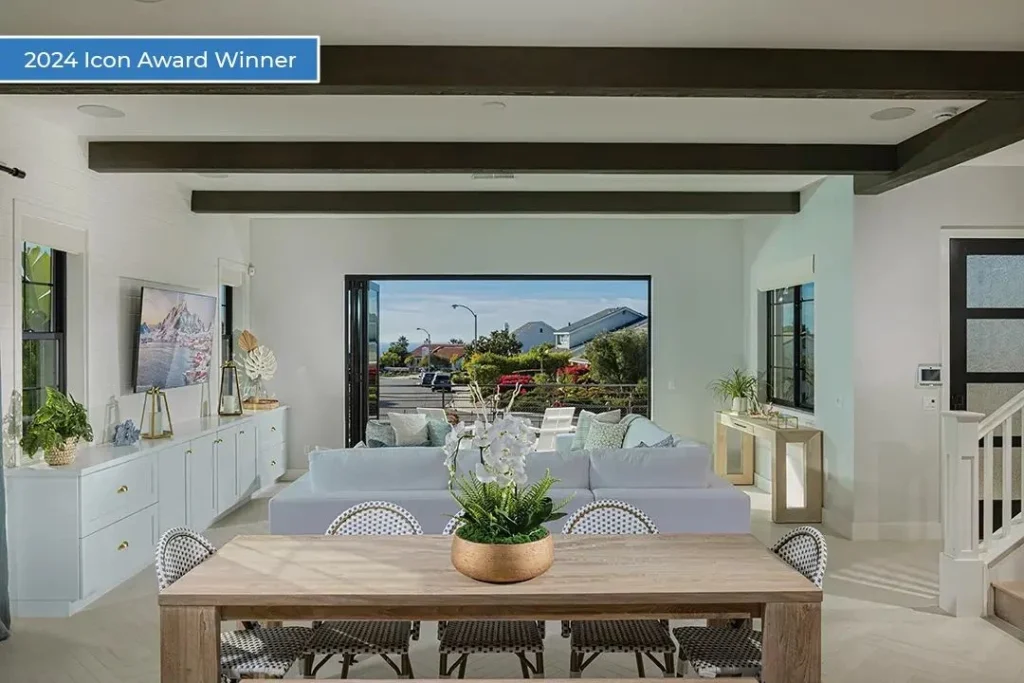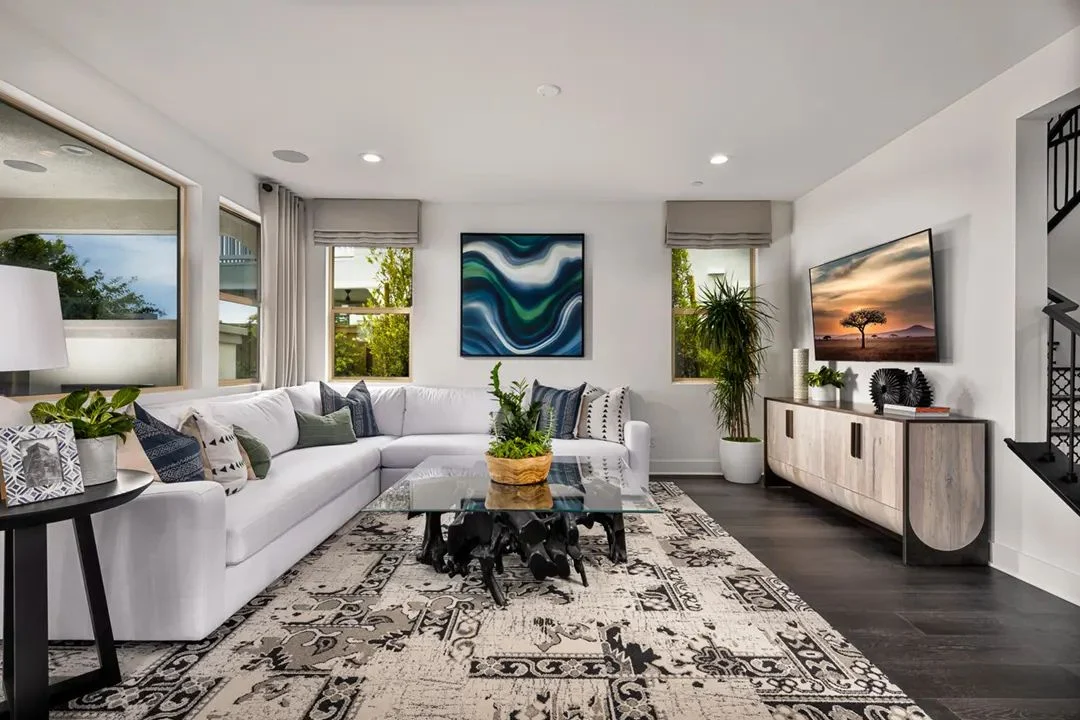
Every builder we work with watches the same weekly numbers: traffic, appointments, contracts, cancellations. Traffic is mostly a marketing question. Conversion is where the model complex earns its keep, and it gets graded every single weekend by people who have just toured three other communities.
After 31 years of merchandising model homes, we’ve noticed something. The complexes that outsell their neighborhood rarely have the biggest furniture budget. They have the clearest story.
What a model home is actually for
A model is not a showroom and it’s not a magazine spread. It’s a sales tool with three jobs:
- Make the plan legible. A buyer should understand how the house works within a minute of walking in. Where the family eats, where the kids land after school, where the TV goes, where the second home office hides.
- Let the buyer picture their own life. Not ours, not the designer’s. Theirs, with their kids, their dog and their weird collection of cast iron pans.
- Make the options path obvious. The buyer should leave knowing which upgrades they want and why, so the design studio appointment starts warm instead of cold.
If a model is beautiful but fails one of those three, it’s a lovely place for a sales agent to eat lunch.
Merchandise the plan’s weakness first
Every plan has a soft spot. A dining area that’s a little tight. A secondary bedroom with an awkward window. A loft nobody knows what to do with. Buyers find those spots fast, and they talk about them in the car.
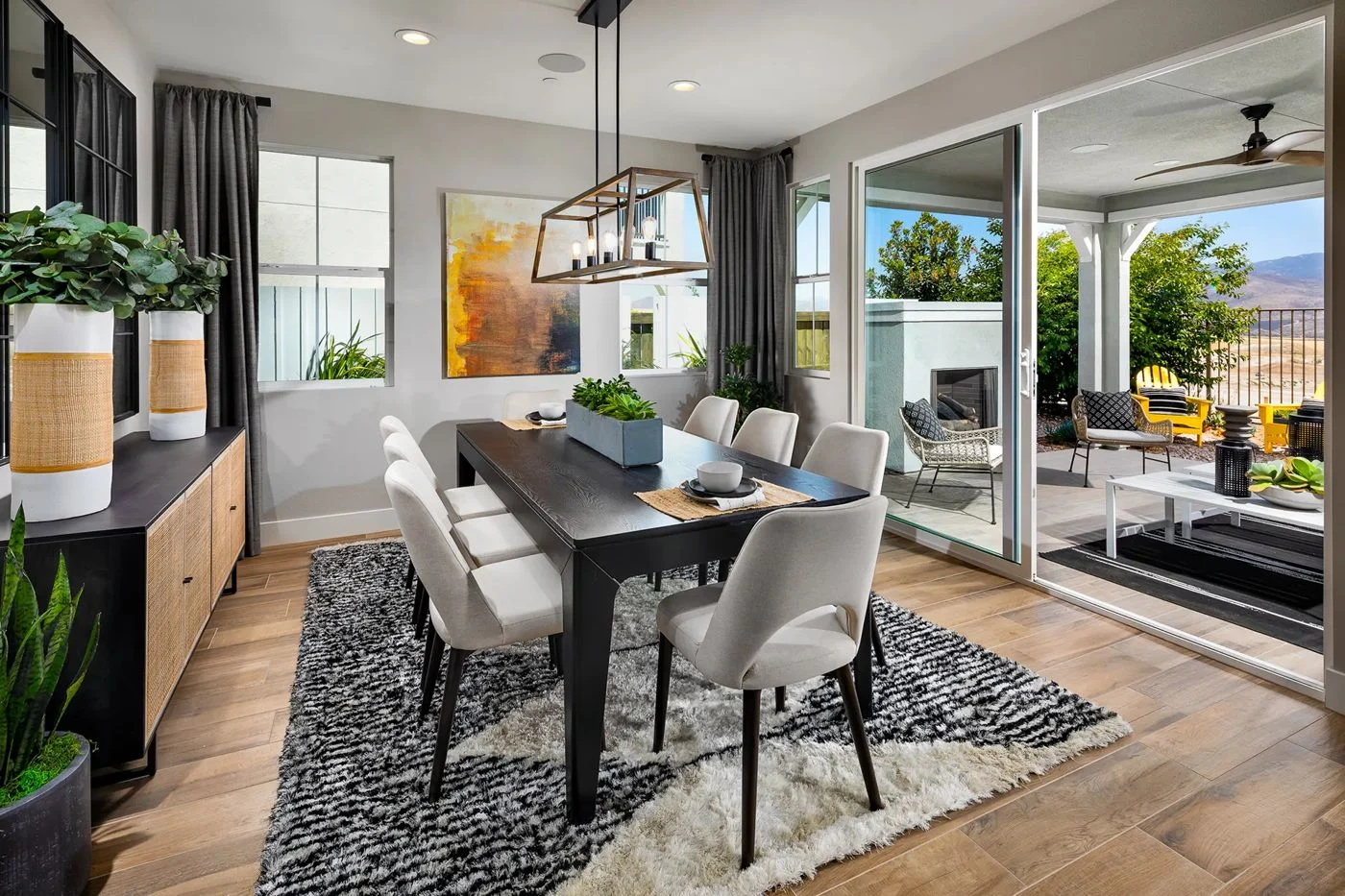
The best move is to design those rooms first. Show the tight dining area with a round table and a banquette, and suddenly it seats six. Turn the awkward loft into a homework zone with a long built-in desk, and it becomes the reason a family picks that plan. We’d rather solve the weak room than add another accessory to the strong one.
A model complex sells the plan’s best room on its own. Your merchandising dollars should go to the room that needs the help.
Where sales pace gets won or lost
Here’s how we think about the tour, moment by moment.
| Moment on the tour | What helps conversion | What hurts it |
|---|---|---|
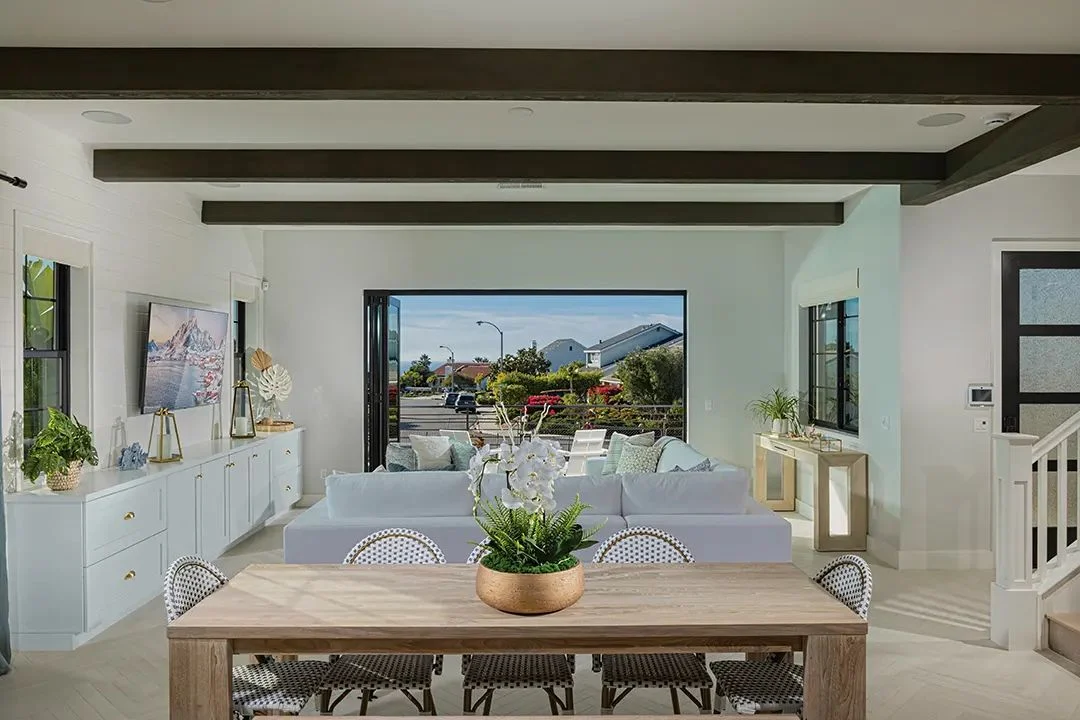
| Front door and first view | A clear sightline through to the great room and yard | A cluttered entry that hides the volume |
| Kitchen | Island set for real life, stools, a few working props | Staged so tightly nobody can picture cooking |
| Great room | Furniture scaled to show a sectional really fits | Undersized pieces that make buyers suspicious |
| Primary suite | Calm, restful, a clear path to the closet and bath | Busy bedding and too many pillows |
| Secondary bedrooms | Each one tells a different household story | Three nearly identical guest rooms |
| Flex rooms | A specific use: office, gym, playroom, guest | A vague “bonus room” with a chair in it |
| Backyard | An outdoor room with shade and seating | A bare patio and a potted plant |
Buyers are smart. When furniture is shrunk down to make rooms look bigger, they notice, and they start doubting everything else. Scale furniture to what a real family will actually move in. It builds trust, and trust is a big part of pace.
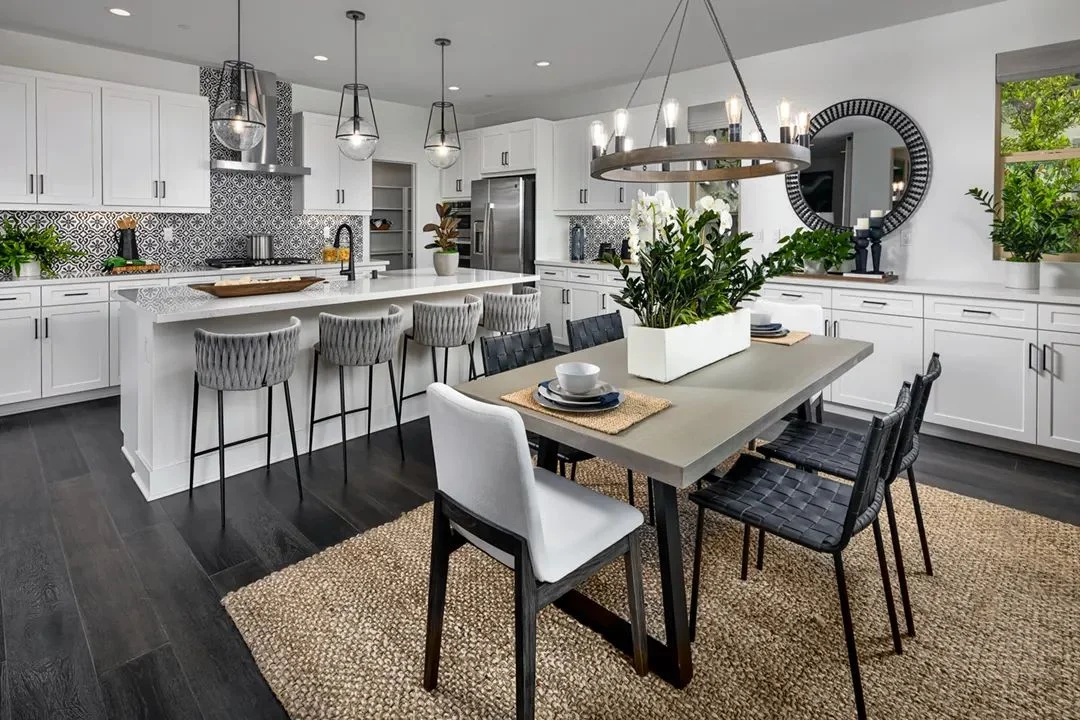
Match the models to the buyer who is actually coming
Your sales team already knows who walks through the door. First-time buyers stretching to get in. Move-up families outgrowing a starter home. Empty nesters trading a big yard for a lock-and-leave lifestyle. Each one needs to see something different.
Start every model complex by sitting down with sales and asking plain questions. Who bought the last phase? Who walked away, and what did they say? Which plan gets toured most and contracts least? Those answers shape the merchandising more than any trend report.
Consistency across the complex
A model complex is one argument told in three or four chapters. Each home should feel distinct so buyers can remember them in the car (“the one with the bunk room”), but the quality level, the tone and the level of finish should feel like one builder made them all.
When one model looks noticeably richer than the others, buyers often assume the lesser plans are the lesser product. That can push traffic toward your lowest-margin plan or stall your entry plan entirely. Balance matters.
Keep it fresh without starting over
Model homes take a beating. Every weekend brings a fresh crowd of hands on the same cabinet pulls, kids bouncing on the same bed, the same throw pillow picked up and put down every weekend. By the middle of a community’s life, a model can start to look tired, and tired models tend to sell slower.
A few habits help:
- Specify for traffic. Performance fabrics, durable rugs and sturdy frames. Looks like home, tougher underneath.
- Plan a mid-life refresh. New accessories, bedding and art in one or two key rooms can make a model feel new again without a full redo.
- Walk it like a buyer. Every few months, someone should tour the complex cold and write down what feels dated, worn or confusing.
- Update when the buyer shifts. If a later phase attracts a different buyer, the merchandising should follow.
Where we come in
We do best when we’re brought in early, while the plans are still being finalized. That’s when we can flag a window that fights the bed wall or a great room that won’t hold a real sectional. Once the models are framed, those fixes cost real money. Before that, they’re a conversation.
From there we handle design, furniture, art, accessories, procurement, delivery and install, so your sales team gets a finished complex on the date the grand opening is already scheduled.
The short version
- The model complex is a sales tool: make the plan legible, let buyers see their own life, and make the options path obvious.
- Spend merchandising effort on the plan’s weakest room, and scale furniture honestly.
- Keep the complex consistent, durable and refreshed as the buyer and the community change.
There’s no better feeling than hearing a sales agent say a model is doing the selling for them.
Our question for youWhich room in your current model complex do buyers talk about most on the way out the door?